
 English
 Hindi
Hindi Arabic
 Bengali
 Chinese
 French
 German
 Italian
 Japanese
 Korean
 Russian
 Spanish
 Thai
Thai Vietnamese

Many people blame themselves for feeling tired during the day.
They think they are lazy.
They think they lack discipline.
But sometimes the real reason is much simpler: you may just be sleep-deprived.
Sleep is not just “rest.” It is an essential biological process that affects the brain, hormones,
metabolism, and overall health.
What Happens When You Don’t Sleep Enough?
Most adults need around 7–9 hours of sleep per night for proper functioning.
When sleep is consistently shortened, the brain and body begin to compensate in ways that
affect how you feel and perform during the day.
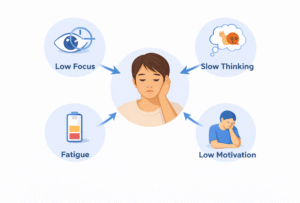
You may notice:
● Difficulty concentrating
● Slower thinking
● Persistent fatigue
● Reduced motivation
From the outside, it may look like laziness. In reality, the brain is simply functioning under
sleep deficit.
Sleep Also Affects Your Hormones
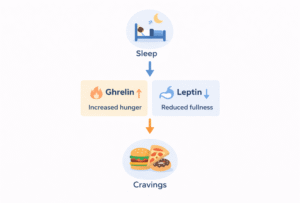
Sleep plays an important role in regulating hormones related to appetite and metabolism.
When sleep is insufficient, studies have shown changes in hormones such as:
● Ghrelin, which increases hunger
● Leptin, which signals fullness
This imbalance can lead to increased appetite and stronger cravings for high-calorie foods.
Over time, chronic sleep deprivation has been associated with weight gain and metabolic
disturbances.
The Brain Feels It Too
Sleep loss affects the prefrontal cortex, the area of the brain responsible for focus,
decision-making, and self-control.
When this part of the brain is fatigued, even simple tasks can feel harder to start or finish.
That familiar feeling of “I just can’t get myself to do it” may not be a character flaw — it may
be physiology.
Sleep Is Part of Preventive Health
Long-term sleep deprivation has been associated with increased risk of conditions such as:
● Insulin resistance
● Type 2 diabetes
● Cardiovascular disease
Sleep is not a luxury. It is a core component of health, just like nutrition and physical activity.