
 English
 Hindi
Hindi Arabic
 Bengali
 Chinese
 French
 German
 Italian
 Japanese
 Korean
 Russian
 Spanish
 Thai
Thai Vietnamese

Most People only think about their health when something forces them to. A persistent cough, an unusual pain, a fatigue that won’t lift, something has to go wrong before the question gets asked. So when a routine blood test comes back with flagged results despite feeling perfectly well, it catches people off guard. Not because the result is wrong, but because the assumption was wrong.
Feeling fine and actually being in good health are not always the same thing, and understanding why that gap exists is one of the more useful things you can know about your own body.
The Body Can Compensate Quietly For Years
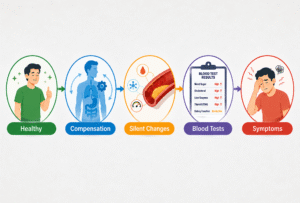
When something starts going wrong internally, the body’s first response is not to alarm you; it’s to compensate. Hormones adjust; other organs adjust; and the system finds a way to keep functioning within what feels like a normal range. This compensation is genuinely helpful, but it comes with a catch: it masks what’s actually happening.
Blood sugar can rise for years before anyone feels the difference. Cholesterol can accumulate in the walls of arteries without producing a single symptom. The thyroid can slow down gradually while the person attributes their tiredness to a busy week at work. None of these feels like medical problems in their early stages because the body is still managing, just with increasing effort behind the scenes.
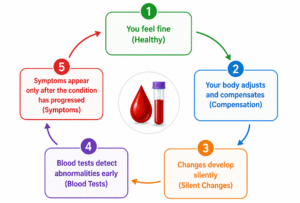
By the time most people feel something is wrong, the condition has been developing for a long time. Blood tests catch it during that silent phase, which is exactly when it’s easiest to address.
What Blood Tests Are Actually Looking At?
A standard blood panel covers more than most people realise. Blood sugar, cholesterol, liver function, thyroid, and kidney markers are all assessed from a single test. Each one can show a problem developing long before any symptoms appear. Feeling fine doesn’t mean all five are in good shape, and you won’t know unless you check.
The Gap Between Symptoms and Disease
There’s a tendency to treat symptoms as the reliable signal, the thing that tells you when to pay attention. In reality, symptoms are a late-stage signal. They appear after a condition has already progressed far enough to disrupt the body’s ability to compensate quietly. Before that point, the only reliable way to know what’s happening is to measure it.
Think of it like a slow puncture in which the car drives fine for a while, and you don’t notice anything, but the pressure has been dropping the whole time. By the time you feel it in the steering, you’ve been running low longer than you realise. Routine blood testing is simply checking the pressure before you feel the difference in the steering.
Why This Is Particularly Relevant for Expats in Bangkok
Living abroad introduces health concerns that don’t always get enough attention. Diet shifts, sleep patterns change, stress levels adjust to a new environment, and the routine structures that kept annual check-ups on the calendar back home tend to fall away. A GP visit that would have happened automatically through an employer scheme or national health system gets skipped, and then skipped again, until the gap between screenings stretches into years.
Bangkok’s lifestyle also carries its own metabolic considerations. The food environment, activity patterns, and social habits are different from what most expats are used to, and those differences can affect blood sugar, cholesterol, and liver markers in ways that develop quietly over time. None of it feels dramatic in the moment, which is exactly the point.
When Is the Right Time to Get a Blood Test
For most healthy adults under forty with no family history of chronic illness, an annual basic blood panel is sufficient to stay informed. From forty onwards, a more thorough screen covering cardiac risk markers, thyroid function, and liver health becomes increasingly worthwhile. Anyone with a family history of diabetes, heart disease, or thyroid conditions should start earlier and screen more frequently, regardless of how they feel.
For expats and long-term visitors in Bangkok, a practical rule of thumb is this: if you haven’t had a blood test in the past twelve months and you’re relying on feeling fine as your health indicator, that’s a good enough reason to book one.
The Point
Feeling fine is a good sign, but it’s not a complete picture.
Blood tests can check what you can’t feel, and they can do so early, when the options are widest, and the required changes are smallest. A dietary adjustment, a low-dose medication, a lifestyle change made with actual data behind it are very different from managing something that’s been silently developing for years. The best time to check is before anything feels wrong.
That said, testing alone isn’t the whole answer.
While blood tests give you the data, a few basics go a long way in keeping those numbers where they should be. Eating mostly whole foods and limiting processed ones, moving your body consistently, even if that just means walking, getting seven to eight hours of sleep, and keeping alcohol intake moderate are not groundbreaking recommendations, but they’re the ones that show up most reliably in good blood results. Hydration matters more than most people realise, especially in Bangkok’s heat, where it’s easy to run under-hydrated without noticing. None of this replaces testing, but it gives your body the best conditions to work with between screenings. Know your numbers, look after the basics, and deal with problems while they’re still small enough to deal with easily.