
 English
 Hindi
Hindi Arabic
 Bengali
 Chinese
 French
 German
 Italian
 Japanese
 Korean
 Russian
 Spanish
 Thai
Thai Vietnamese

Most people drink water when they are thirsty; the problem is that by the time you feel thirsty, your body is already working harder than it should.
Thirst is not the first signal your body sends when it needs fluid – It is often one of the last. The early signs of dehydration are so easy to mistake for other things, like stress, a bad night’s sleep, too much caffeine, many people spend their days in a mild state of under-hydration without ever realising.
This is not about counting glasses of water. It is about learning to recognise what your body is actually telling you.
Signs that Go Beyond Thirst
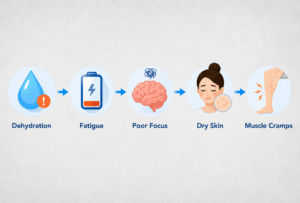
Pay attention if any of these feel familiar, especially when they appear together across several days.
- Fatigue that does not improve with rest – cells need water to generate energy, and even mild dehydration slows that process.
- Difficulty concentrating or mental slowness – a fluid deficit of just 1-2% of body weight is enough to dull focus and memory.
- Dark yellow urine, or urinating less often than usual – your kidneys concentrate fluid to compensate, which shows up in colour and frequency.
- Dry or dull skin – when fluid is scarce, the body redirects it to vital organs, and the skin loses out first.
- Muscle cramps or joint stiffness – cartilage is mostly water, and muscles need balanced electrolytes to contract properly.
Hydration is Not Just About Water
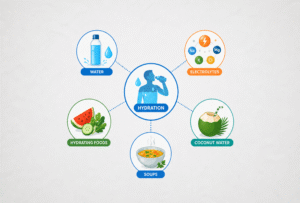
Plain water is a fundamental, but it is not the whole picture. Electrolytes like sodium, potassium, magnesium, and chloride are what allow your cells to actually use the fluid you drink. This is why large amounts of plain water after significant fluid loss (through exercise, heat exposure, or illness) do not always resolve symptoms quickly.
Food contributes meaningfully too. Cucumber, watermelon, coconut water, leafy greens, and soups all count toward your daily intake. Coffee and tea count toward fluid intake in moderate amounts, despite a common belief otherwise.
Simple Habits that Make a Real Difference
- Start your morning with a glass of water – your body has been without fluid overnight.
- Keep a visible water bottle on your desk as a reminder.
- Eat hydrating foods at least once a day.
- Elevate your water intake before outdoor activity.
- Maintain hydration, especially on warm days.
Thirst is your body’s backup alarm; if you are waiting for it before drinking, you are already dehydrated. The best approach is to make hydration a consistent habit- not a response to how thirsty you are.