 English
 Hindi
 Arabic
 Bengali
 Chinese
 French
 German
 Italian
 Japanese
 Korean
 Russian
 Spanish
 Thai
 Vietnamese

Why Blood Pressure Can Rise in Cooler Weather

Blood pressure in cooler weather can shift along with changes in how people eat, move, and sleep. For most healthy adults the change is small, but for some it matters. This guide explains why it happens, who may be more affected, and how to monitor and manage your blood pressure.
Can Cold Weather Raise Blood Pressure?
Yes, it can, but not automatically and not for everyone. Cold exposure triggers normal body responses that can temporarily raise blood pressure, and some research has found slightly higher average readings in colder months.
Does blood pressure usually rise in winter? On average, studies suggest a modest seasonal pattern. One large U.S. review of more than 60,000 adults with hypertension found average systolic readings slightly higher in winter and lower in summer, with somewhat poorer blood pressure control in winter. It was an observational study of one population, so it does not describe every individual.
Why Blood Pressure May Increase When Temperatures Drop
Blood Vessel Constriction
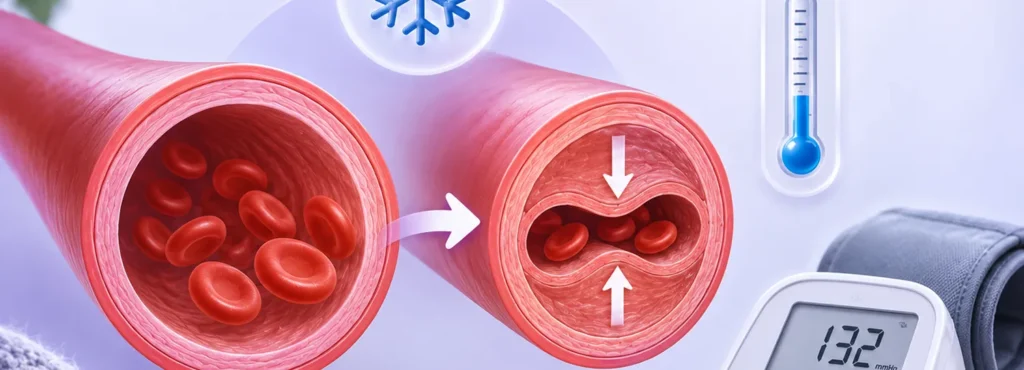
When your body is exposed to cold, blood vessels near the skin can narrow to conserve heat. This is called vasoconstriction. Narrower vessels increase resistance to blood flow, so blood pressure can rise.
This is a normal physiological response, not proof that every cold-weather reading will be high. It may be more noticeable in people who already have hypertension or other cardiovascular risk factors.
Changes in the Body’s Stress Response
Cold exposure can also activate the sympathetic nervous system, which manages “fight or flight” responses. This can influence blood vessel tone and heart activity and add to a temporary rise in pressure.
Age, health status, indoor temperature, and lifestyle all shape the pattern. A seasonal increase does not mean someone has developed chronic hypertension.
A note for Bangkok: Bangkok’s cooler season is mild compared with temperate climates, so the physiological effect may be smaller. Air conditioning, early-morning exercise, and holiday eating can still influence readings.
Lifestyle Factors That Can Affect Blood Pressure

Reduced Physical Activity
Some people exercise less when it is cooler. Can reduced physical activity affect blood pressure? Yes. Less movement can affect fitness, weight, and blood pressure control. Indoor options include mall walking, home workouts, or stair climbing. Exercise supports healthy blood pressure but never replaces prescribed treatment.
Changes in Diet and Sodium Intake
Some people eat more salty, processed, or calorie-dense foods in cooler months. Excess sodium can raise blood pressure in salt-sensitive individuals. Favor balanced meals with vegetables, fruit, and whole grains, and check labels; soups, sauces, and instant foods are common hidden sources.
Weight, Alcohol, Stress, and Sleep
Weight: Changes in eating and activity may lead to weight gain in some people, though not everyone. Excess weight is associated with higher blood pressure.
Alcohol: Alcohol can raise blood pressure and is not a necessary part of any season. Follow health guidance and discuss your use with a professional if relevant.
Stress and sleep: Ongoing stress and poor sleep can affect blood pressure regulation. These depend on individual circumstances, not the weather itself.
Who May Be More Affected by Seasonal Blood Pressure Changes?
Seasonal changes may be more relevant for older adults, people with hypertension or cardiovascular disease, people with diabetes or kidney disease, those with several cardiovascular risk factors, and anyone much less active in cooler periods. These groups may benefit from closer monitoring, but risk varies and many will notice little change.
Can medication needs change with the seasons? For some people, a clinician may review treatment as conditions change. Should you change medication in colder weather? Only a qualified healthcare professional should make that decision. Never reduce, stop, or increase medication on your own because readings shift.
How to Monitor Your Blood Pressure During Cooler Weather
High blood pressure often has no symptoms. Headaches, dizziness, or fatigue are not reliable signs, so regular measurement is more useful than relying on how you feel. A single reading is a snapshot. A temporary rise differs from repeated elevated readings, and hypertension is diagnosed clinically, not from one measurement. Persistently high pressure raises cardiovascular and kidney risk over time.
For reliable home readings, following American Heart Association guidance:
Use a validated, upper-arm monitor with a properly fitted cuff.
Avoid exercise, smoking, caffeine, and alcohol for 30 minutes beforehand.
Sit quietly for five minutes, back supported, feet flat, legs uncrossed.
Rest your arm at heart level, with the cuff on bare skin.
Take two readings about one minute apart and record both.
Measure in a comfortably warm room, at consistent times.
Cold air, recent activity, stress, or poor technique can distort readings. Keep a log for appointments.
How often should you check? Follow your healthcare professional’s instructions. Avoid repeated checking driven by anxiety, which can itself raise readings.
How to Maintain Healthy Blood Pressure
Stay active when conditions are comfortable.
Follow a balanced eating pattern with moderate sodium.
Maintain a healthy weight where relevant.
Limit alcohol and avoid smoking.
Prioritize sleep and manage stress.
Take prescribed medication as directed and attend follow-up visits.
Lifestyle measures support, but do not replace, prescribed treatment.
When Should You Seek Medical Attention?
Contact a healthcare professional about repeatedly elevated readings, readings above your target, new or worsening symptoms with known hypertension, or high readings alongside other risk factors. Do not wait for a routine appointment if readings stay high.
When is high blood pressure an emergency? A reading above 180 systolic and/or 120 diastolic needs prompt attention. Rest a few minutes and measure again.
If it remains this high with chest pain, shortness of breath, weakness, numbness, vision changes, difficulty speaking, or other signs of organ injury, seek emergency help immediately.
If it remains this high without symptoms, contact a healthcare professional urgently for instructions.
Severe symptoms need emergency assessment regardless of the reading.
Can a Health Check-Up Help Assess Your Cardiovascular Risk?
Blood pressure measurement is the main way to identify elevated blood pressure. A check-up can add context through medical and family history, weight, cholesterol, blood glucose or HbA1c where appropriate, and kidney tests when indicated. Blood tests do not diagnose hypertension on their own, a single normal reading does not always rule it out, and not everyone needs every test.
If you are considering a health assessment in Bangkok, explore PrimeCare Bangkok’s health check-up packages and confirm which assessments suit your needs. A check-up is not a substitute for ongoing blood pressure monitoring or individualized medical care.
Frequently Asked Questions
Q1. Can cold weather raise blood pressure?
Ans. Yes, cold can narrow blood vessels and temporarily raise readings, but the effect varies and does not automatically cause hypertension.
Q2. Does blood pressure usually rise in winter?
Ans. Some studies show modestly higher averages in colder months; individual responses differ.
Q3. Who is more affected by seasonal changes?
Ans. Older adults and people with hypertension, cardiovascular disease, diabetes, or kidney disease, though not everyone will notice a change.
Q4. Should I adjust my medication in cold weather?
Ans. No. Only a qualified healthcare professional should adjust medication.
Q5. Can a cold-weather reading be misleading?
Ans. Yes. Cold air, activity, and stress can affect readings, so rest in a warm room first.
Sources
AHA, Monitoring Your Blood Pressure at Home
AHA, Measuring Your Blood Pressure at Home (PDF)
Coverage of the AHA Hypertension 2023 seasonal variation study (AMA MAP program)