
 English
 Hindi
Hindi Arabic
 Bengali
 Chinese
 French
 German
 Italian
 Japanese
 Korean
 Russian
 Spanish
 Thai
Thai Vietnamese

On very hot days in Bangkok, many people notice the same thing.
They feel unusually tired. A little dizzy. Sometimes even slightly nauseous or lightheaded.
It’s easy to blame it on a long day or lack of sleep, but in many cases, the heat itself is the
reason.
Your body has to work much harder when the temperature rises.
Your Body Is Trying to Cool Itself
When the weather is extremely hot, the body activates its natural cooling system —
sweating.
Sweating helps release heat through the skin and keeps the body temperature from rising
too much. But there is a trade-off. When you sweat, you also lose water and electrolytes
such as sodium.
If the lost fluids are not replaced, even mild dehydration can start to develop. That alone can
already make you feel tired, weak, or slightly dizzy.
Why Dizziness Happens?
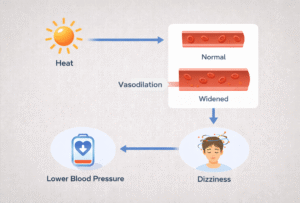
Another thing happens in hot weather.
To help release heat, your body widens the blood vessels near the skin. This process is
called vasodilation.
While this helps the body cool down, it can also cause blood pressure to drop slightly —
especially if you’re already a bit dehydrated.
When that happens, you might feel:
● Lightheaded
● Weak
● Tired
● Slightly dizzy when standing up
It’s your body adjusting to both the heat and the fluid loss.
Sweating Means You’re Also Losing Electrolytes
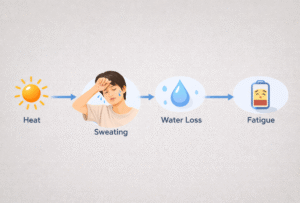
Sweat is not just water. It contains important minerals, especially sodium.
When sweating is heavy, losing these electrolytes can contribute to symptoms like fatigue or
muscle cramps.
For most people, drinking water regularly is enough. But when you’re spending a long time in
the heat or sweating heavily, electrolyte replacement can sometimes help as well.
When Heat Becomes More Serious?
If heat exposure continues and the body cannot keep up, symptoms can progress to heat
exhaustion.
You may notice:
● Persistent dizziness
● Nausea
● Heavy sweating
● Weakness
● Headache
These are signs that the body is struggling to maintain a stable temperature and hydration levels.
A Simple Way to Protect Yourself
In hot weather, prevention is actually quite simple.
Drink water regularly.
Take breaks from the heat when possible.
Avoid prolonged activity during the hottest hours of the day.
And remember that thirst is often a late signal that the body already needs fluids.