
 English
 Hindi
Hindi Arabic
 Bengali
 Chinese
 French
 German
 Italian
 Japanese
 Korean
 Russian
 Spanish
 Thai
Thai Vietnamese
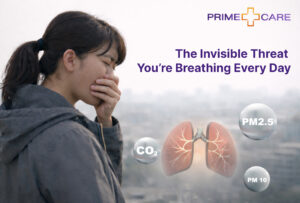
During periods of high air pollution in Bangkok, many people experience irritated eyes, chronic cough, worsening allergies, headaches, fatigue, or a general feeling of being unwell — even when they are eating well, exercising, and taking care of themselves.
One major factor is often overlooked: PM2.5 air pollution.
What Is PM2.5 and Why Is It So Dangerous?
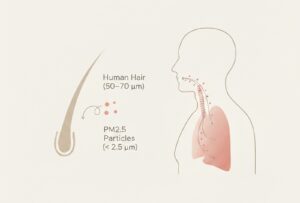
PM2.5 refers to fine particulate matter smaller than 2.5 micrometers in diameter. To understand how small that is, PM2.5 particles are about 1/30th the diameter of a human hair.
Because of their microscopic size:
- They cannot be seen or felt
- They bypass the nose and upper airway defenses
- They travel deep into the lungs, reaching the air sacs (alveoli)
From there, PM2.5 particles can enter the bloodstream, triggering inflammation throughout the body. This ability to penetrate so deeply is what makes PM2.5 particularly harmful — far more dangerous than ordinary dust.
According to the World Health Organization (WHO), air pollution is one of the most significant environmental threats to health worldwide. In 2019, an estimated 99% of the global population was exposed to air quality levels that exceeded WHO guideline limits. Outdoor air pollution alone was linked to approximately 4.2 million premature deaths globally, largely due to cardiovascular disease, stroke, chronic respiratory disease, and lung cancer — highlighting that the impact of air pollution extends far beyond temporary discomfort.
The Role of PM2.5 Protective Masks
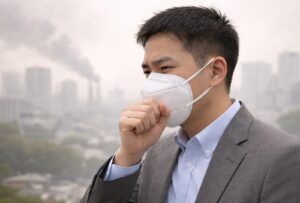
Because PM2.5 particles are extremely small, not all masks provide adequate protection. Masks designed to filter fine particles — such as PM2.5-rated masks or N95-equivalent masks — can significantly reduce inhalation of harmful particles.
During periods of poor air quality:
- Wearing an appropriate protective mask outdoors can help reduce exposure ● Avoid prolonged outdoor activity without protection
- Improving indoor air quality can further support respiratory health
Using protective equipment is not about fear — it’s about preventive care and long-term health protection.
When Outdoor Exercise May Do More Harm Than Good During High PM2.5 Levels
Regular exercise is an important part of a healthy lifestyle, and many people in Bangkok enjoy outdoor running or walking as part of their routine. However, during periods of high PM2.5 levels, it’s important to be more mindful.
When air pollution is elevated, exercising outdoors means breathing faster and deeper, which can increase the amount of PM2.5 entering the lungs. In these situations, the health burden from pollution exposure may outweigh the usual benefits of outdoor exercise, particularly for the lungs and cardiovascular system.
Checking the daily air quality index before exercising can help you make safer decisions for your health.
A Thoughtful Approach to Breathing Well
PM2.5 may be invisible, but its effects on the body are well-documented. During high-pollution periods, small adjustments — such as checking air quality, choosing the right protection, and modifying daily routines — can make a meaningful difference.
Taking care of your health sometimes means knowing when to slow down, adapt, and protect your body — especially in a busy urban environment like Bangkok.