
 English
 Hindi
Hindi Arabic
 Bengali
 Chinese
 French
 German
 Italian
 Japanese
 Korean
 Russian
 Spanish
 Thai
Thai Vietnamese

There’s a pattern a lot of people recognize: the fever breaks, the cough fades, the worst of the illness is clearly over, and yet two weeks later, you’re still wiped out by the end of a normal workday. It can feel confusing, even a little alarming, especially when everyone around you assumes you should be “back to normal” by now.
What Is Post-Viral Fatigue?
Post-viral fatigue describes tiredness or reduced stamina that continues after the main symptoms of a viral illness have resolved. It’s common after infections like the flu, colds, mononucleosis, and COVID-19, among others. It isn’t a single diagnosis with one clear test behind it, it’s a description of a recovery pattern, and it can range from mild and short-lived to more prolonged and disruptive. Feeling tired for a few days after a virus doesn’t mean something is medically wrong; it’s simply part of how the body recovers.
Why Recovery Isn’t Always Linear

One of the more frustrating parts of getting over an illness is that improvement doesn’t move in a straight line. You might feel noticeably better for a few days, try to resume your usual routine, and then find yourself unexpectedly drained again. This happens because the body is doing more than fighting off the initial infection, it’s also repairing tissue, restoring normal sleep patterns, and rebuilding the physical conditioning that gets lost during even a short period of being sick and inactive. Energy tends to return in an uneven pattern rather than a steady daily climb, and that’s a normal part of recovery for many people, not a sign that something has gone wrong.
Why You May Still Feel Tired After an Infection
Several ordinary factors can extend how tired you feel well past the point when the infection itself has cleared. Sleep is often disrupted during illness, and it can take time to settle back into a normal rhythm. Physical activity usually drops sharply while you’re sick, and stamina takes a while to rebuild once you’re back on your feet. Dehydration and reduced appetite during the acute illness can leave you running on less fuel than usual. Stress, including the stress of missed work or falling behind, can also add to the fatigue. None of this means the virus is still active or that something is “still wrong” internally; it reflects the ordinary physical toll of being sick and the gradual process of rebuilding.
It’s also worth being precise about one term that comes up often in this context: post-exertional malaise, or PEM. This isn’t the same as normal tiredness after a workout or a busy day. PEM refers to a delayed worsening of symptoms, sometimes appearing a day or two after physical, mental, or emotional exertion, and it can take much longer than expected to settle. It’s a recognized feature of some post-viral conditions, but most people recovering from a typical viral illness experience ordinary fatigue that improves with rest and gradual activity, not PEM. The distinction matters because the two call for different approaches to pacing activity.
When Fatigue May Need a Closer Look
There isn’t a fixed number of days that separates “normal” from “worth checking.” What matters more is the trajectory and impact. It’s reasonable to bring fatigue to a doctor’s attention when it’s lasting longer than you’d expect for the illness you had, when it’s getting worse instead of gradually improving, when it’s seriously interfering with work, school, or daily activities, when it keeps returning after even modest activity, or when it’s showing up alongside other symptoms that don’t fit the picture of ordinary recovery. A doctor can help interpret whether what you’re experiencing fits a typical recovery curve or points toward something else.
Could Something Else Be Causing the Fatigue?
Persistent fatigue has a long list of possible explanations that have nothing to do with a recent virus. Iron deficiency, thyroid disorders, sleep problems, certain medications, ongoing stress or low mood, and metabolic conditions like diabetes can all cause similar tiredness, sometimes independent of any recent illness and sometimes overlapping with it. Depending on your symptoms and history, a clinician may consider these other possibilities rather than assuming the fatigue is simply left over from the infection. This is one of the more useful reasons to get persistent fatigue evaluated rather than waiting it out indefinitely.
How Is Persistent Fatigue Evaluated?
A doctor typically starts by talking through your recent illness and recovery timeline, your sleep, activity levels, diet, medications, and any other symptoms, along with a physical exam where relevant. Laboratory testing isn’t a default step for everyone with fatigue, it’s used selectively, based on what the history and exam suggest. Depending on the situation, that might include a blood count, iron studies, thyroid testing, or metabolic markers, but there’s no single “fatigue panel” that applies to every case.
Supporting a Gradual Recovery
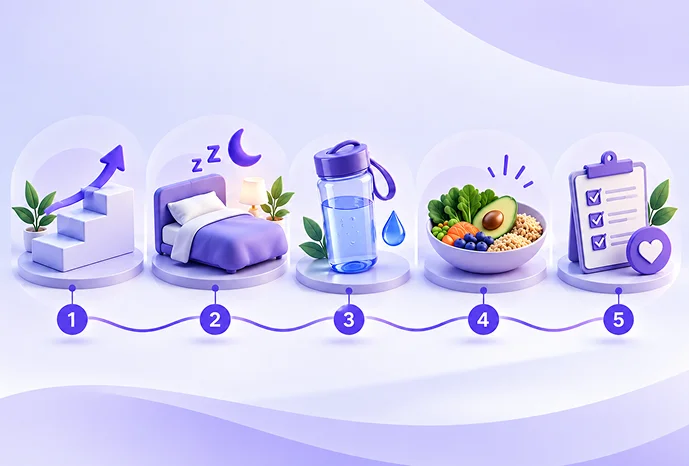
Most post-viral fatigue improves with time and a sensible approach to pacing. That generally means easing back into normal activity gradually rather than jumping straight back to your prior pace, prioritizing consistent sleep, staying hydrated, eating regular balanced meals, and paying attention to how your body responds after activity rather than pushing through exhaustion. If a particular level of activity consistently leaves you worse the next day, that’s useful information worth mentioning to a doctor, not something to just push past.
When to Seek Urgent Medical Care
Some symptoms call for prompt medical attention rather than a routine follow-up, including difficulty breathing, chest pain or pressure, fainting or significant dizziness, new confusion, sudden severe weakness, new neurological symptoms, or a high fever that returns after it had resolved. These aren’t typical features of ordinary post-viral fatigue, and if they occur, they should be evaluated urgently rather than attributed to a recent illness.
A Reasonable Way Forward
Feeling tired for a while after being sick is common, and for most people, it resolves gradually with rest, time, and a sensible return to normal activity. But persistent or worsening fatigue deserves attention rather than assumption. If it’s not following that gradual improving pattern, or something about it feels off, a conversation with a doctor, and, if warranted, some targeted lab testing can help figure out whether something beyond ordinary recovery is going on.
Frequently Asked Questions
Q1. What is post-viral fatigue?
Ans1. Tiredness or reduced stamina that continues after the main symptoms of a viral illness have cleared, common after infections like flu, colds, or COVID-19.
Q2. Why am I still tired after a viral infection?
Ans2. Ongoing tissue repair, sleep disruption, reduced activity during illness, and the gradual process of rebuilding stamina can all contribute, separate from the infection itself still being active.
Q3. Why does recovery sometimes come in waves?
Ans3. The body recovers unevenly rather than in a steady daily climb, so a good day followed by a harder one is a common, normal pattern.
Q4. How long can fatigue last after a viral infection?
Ans4. It varies widely depending on the illness and the individual, there’s no fixed timeline, which is why worsening or persistent symptoms matter more than a specific day count.
Q5. When should persistent fatigue be checked by a doctor?
Ans5. When it’s lasting longer than expected, getting worse, significantly limiting daily life, or accompanied by other unexplained symptoms.