
 English
 Hindi
Hindi Arabic
 Bengali
 Chinese
 French
 German
 Italian
 Japanese
 Korean
 Russian
 Spanish
 Thai
Thai Vietnamese

When the afternoon downpours roll in over Bangkok, most of us think about traffic and umbrellas. Mosquitoes rarely cross our minds, but they deserve a moment’s attention. Dengue is endemic in Thailand, and cases typically rise during the rainy months. That doesn’t make Bangkok unsafe, and it doesn’t mean everyone is at high risk. It does mean a few practical habits, and in some cases vaccination, are worth understanding.
Why Does Dengue Risk Rise During Bangkok’s Rainy Season?
Rain doesn’t cause dengue. The virus is carried by infected Aedes mosquitoes, and rainy weather gives those mosquitoes more places to breed. The chain runs like this: rainfall leaves standing water, standing water gives mosquitoes places to lay eggs, and a larger mosquito population means more chances for the virus to spread.
Aedes mosquitoes can breed in very small amounts of water, such as a plant saucer, a clogged gutter, an uncovered water jar or a discarded container. A dense city has plenty of these spots, at homes, construction sites and workplaces alike. Warm, humid weather also supports mosquito activity, and Aedes mosquitoes bite mostly during the day, not just at dusk.
Actual risk still varies by year and by location. It depends on mosquito numbers, which dengue viruses are circulating, local conditions and how much time a person spends where mosquitoes are active.
How Is Dengue Spread?
Dengue is caused by dengue viruses and spreads through the bite of an infected mosquito. A mosquito becomes infected after feeding on a person who has the virus in their blood, and it can then pass the virus to someone else with a later bite. Dengue doesn’t typically spread directly from person to person through casual contact.
What Are the Symptoms of Dengue?
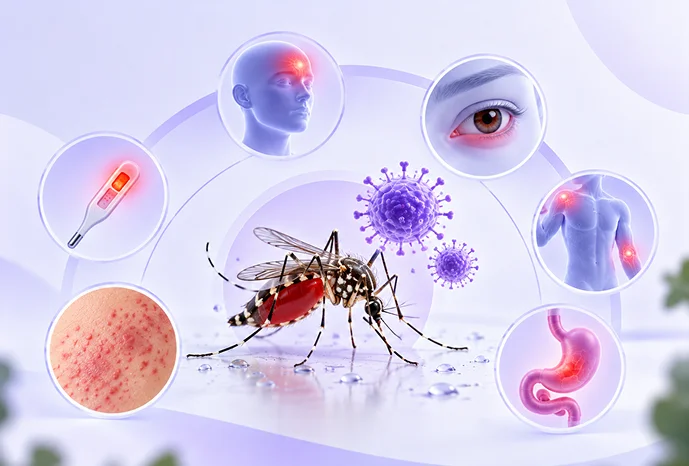
Many people infected with dengue have mild symptoms or none at all. When symptoms do appear, they usually include fever, headache, pain behind the eyes, muscle and joint aches, nausea, vomiting and sometimes a rash. Because other infections, including flu, can look much the same, symptoms alone can’t confirm dengue. If you develop a fever, especially during the rainy season, it’s reasonable to be assessed by a doctor, who can arrange testing.
When Can Dengue Become Serious?
Most people recover with rest, fluids and supportive care, and severe dengue is the exception. Still, it helps to know the warning signs, which tend to appear a few days into the illness, often as the fever starts to come down. That can be the moment people assume they’re getting better.
Seek urgent medical attention if you or someone in your care has:
- Severe abdominal pain
- Persistent vomiting
- Bleeding from the nose or gums
- Vomiting blood or blood in the stool
- Rapid or difficult breathing
- Marked weakness, restlessness or drowsiness
- Signs of dehydration or shock, such as cold, clammy skin
See a doctor before taking medication for a suspected dengue fever. Aspirin and ibuprofen can raise bleeding risk and are generally avoided unless a doctor advises otherwise.
Can Dengue Vaccination Help?
It can. In clinical trials, dengue vaccination has reduced symptomatic dengue and hospitalizations, which is why it’s considered one layer of prevention. It isn’t a guarantee, though. Vaccinated people can still get dengue, so mosquito-bite prevention remains essential.
One vaccine widely offered by private hospitals in Thailand is Qdenga, a live-attenuated vaccine given as two doses three months apart. Because the course takes months to complete, it’s worth thinking about well before peak season rather than during it.
Who May Be Eligible for the Dengue Vaccine (QDenga)?
Eligibility depends on age, health history and the specific vaccine, so there is no single answer. Several Thai hospitals list Qdenga for people aged 4 to 60. For comparison, the WHO’s immunization advisory group recommends it for children aged 6 to 16 in places with a high dengue burden and intense transmission. Public-health recommendations and private-clinic labeling can differ, which is one reason an individual consultation matters.
You don’t necessarily need to have had dengue before, and Thai hospitals report that a blood test beforehand isn’t required. People who have recently had dengue are generally advised to wait before vaccination, and some hospitals say at least six months. Vaccination is usually postponed during a feverish illness and isn’t suitable for everyone, including during pregnancy or breastfeeding, or after a severe allergic reaction to a vaccine component. Tell your clinician about your full medical history, including any immune conditions and medicines.
Vaccination Is Only One Part of Dengue Prevention

Think in layers: vaccination where it’s suitable, bite prevention, and fewer breeding sites.
- Use mosquito repellent as directed on the label
- Wear long sleeves and pants where practical
- Use window screens or air conditioning
- Empty or scrub containers that hold water at least weekly, including plant saucers, buckets, vases and pet bowls
- Cover water storage containers and keep gutters clear
- Take extra care after heavy rain, when mosquito activity can climb
“Dengue only happens near dirty water.” Aedes mosquitoes readily breed in small containers of clean water.
“Once the rain stops, the risk goes away.” Water left behind can keep breeding going, and Aedes eggs can survive dry spells.
“If I’m vaccinated, I don’t need repellent.” Vaccination doesn’t make anyone immune to every infection, so keep protecting yourself from bites.
What About Travelers to Bangkok?
Dengue occurs across many tropical and subtropical regions, including Southeast Asia, so check destination-specific health advice before you travel. Your exposure depends on where you go, how long you stay and how much time you spend outdoors. Vaccination isn’t automatically needed for every traveler. Suitability depends on age, health history and prior dengue, and a two-dose course spaced three months apart may not fit a short trip. Whether vaccinated or not, travelers should use bite prevention throughout their stay.
A Layered Approach
Dengue prevention works best in layers: removing standing water, preventing bites and, for eligible people, vaccination. If you’re wondering whether vaccination is appropriate for you, PrimeCare offers the Qdenga dengue vaccine for ฿3,100 per dose. The course is two doses, with the second given three months after the first. Our team can review your health history and answer your questions before you decide.
Frequently Asked Questions
Q1. Why are mosquitoes more active in the rainy season?
Ans. Rain leaves standing water where Aedes mosquitoes lay eggs, and warm, humid conditions support their activity.
Q2. Can the dengue vaccine prevent dengue?
Ans. It can reduce the chance of symptomatic dengue and hospitalization, but no vaccine offers guaranteed protection.
Q3. How many doses of the dengue vaccine are needed?
Ans. Qdenga, the vaccine commonly offered in Thailand, is given as two doses three months apart.
Q4. Does the vaccine replace mosquito repellent?
Ans. No. Keep using repellent, protective clothing and breeding-site control after vaccination.
Q5. When should I seek medical care for suspected dengue?
Ans. See a doctor if you develop a fever, and seek urgent care for any warning sign listed above, such as severe abdominal pain, persistent vomiting or bleeding.
Q6. Should travelers to Bangkok consider dengue vaccination?
Ans. It depends on age, health history, prior dengue and length of stay, and a clinician can advise. Bite prevention applies to everyone.