
 English
 Hindi
Hindi Arabic
 Bengali
 Chinese
 French
 German
 Italian
 Japanese
 Korean
 Russian
 Spanish
 Thai
Thai Vietnamese

A patient in his late 40s came in describing a stretch of months where he felt “off”, dragging through the day, less interested in things he used to enjoy, and putting on weight despite no real change in diet. He would read online that this sounded like low testosterone and wanted to know if he was right. It’s a common jump to make, and an understandable one, but the real answer takes a bit more unpacking.
What Does Testosterone Actually Do?
Testosterone is the main male sex hormone, produced primarily in the testes. It plays a role in sex drive and erectile function, sperm production, muscle mass and strength, bone density, and the production of red blood cells. It also has some influence on mood, energy, and body composition, though its effects there are less direct than people often assume.
Signs of Low Testosterone Worth Discussing With a Doctor

Some symptoms that may be associated with low testosterone include reduced sex drive, erectile difficulties, fewer morning or spontaneous erections, low energy, reduced muscle mass or strength, increased body fat, low mood, difficulty concentrating, reduced motivation, changes in body hair, and reduced fertility. In some men, low testosterone is also linked with reduced bone density over time.
These Symptoms Do Not Always Mean Low Testosterone
This is the part worth slowing down on. These symptoms can occur with low testosterone, but they are not specific to it, plenty of other conditions produce a very similar picture. Poor sleep, chronic stress, depression, obesity, certain medications, thyroid disorders, and other metabolic or hormonal conditions can all cause fatigue, low mood, reduced sex drive, or weight gain. A man who is sleeping five hours a night and drinking heavily on weekends can feel every bit as “low energy” as one with genuinely low testosterone, without his testosterone being the issue at all. Symptoms point a doctor in a direction to investigate, they don’t confirm a diagnosis by themselves.
How Is Low Testosterone Diagnosed?
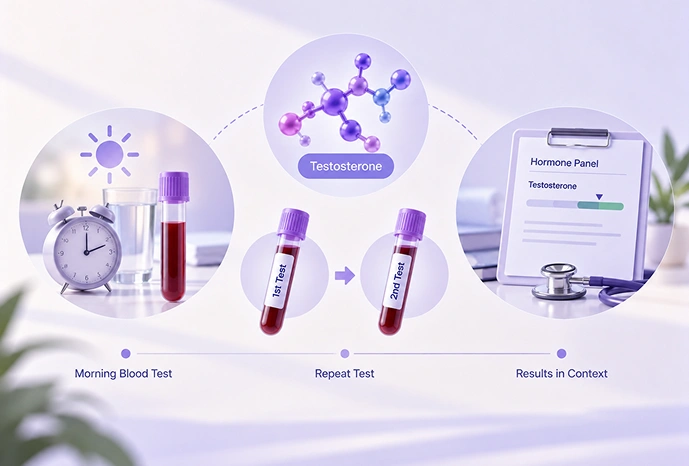
A proper diagnosis generally requires two things together: symptoms and signs consistent with testosterone deficiency, and testosterone levels that are unequivocally and consistently low on blood testing, not one result in isolation and not symptoms alone.
Testosterone is typically measured with a fasting, morning blood test, since levels vary across the day and tend to be highest in the morning, especially in younger men. A single low reading isn’t usually treated as conclusive. Medical guidelines generally call for confirming a low result with a second morning test before drawing conclusions, and in men whose levels sit near the lower end of normal, a free testosterone measurement may also be considered. Testing during an acute illness can also throw off the result, so timing and context matter.
What Can a Hormone Panel Tell You?
A hormone panel gives a doctor a data point, not a verdict. PrimeCare offers testosterone testing as part of its men’s health check-up packages, alongside markers such as vitamin D and vitamin B12 depending on the package selected. A doctor reviews these results together with your symptoms, age, medical history, and any medications you’re taking before drawing conclusions. A hormone panel may provide additional information when a doctor is evaluating symptoms and possible hormonal causes, it isn’t a standalone way to self-diagnose.
When Should You Consider Getting Checked?
Not every tired, stressed-out man needs a testosterone test. It tends to be worth raising with a doctor when symptoms are persistent rather than a bad few weeks, when they’re new and not easily explained by lifestyle changes, when they’re affecting your daily life or sexual health, when fertility is a concern, or when they show up alongside other unexplained changes. A clinician is in the best position to judge whether testing makes sense for your specific situation.
What Happens After Testing?
If testing shows a genuinely low, confirmed testosterone level, the next step is figuring out why primary testicular causes and pituitary-related causes are managed differently, and that distinction usually calls for further evaluation rather than an immediate prescription. Whether treatment is appropriate depends on the cause, the severity of symptoms, other health conditions, and the individual’s goals and preferences. Testosterone replacement therapy isn’t automatic just because a level comes back low, and it isn’t something to start based on symptoms or an at-home test alone. It’s also worth flagging early: men who are trying to conceive should discuss this with their doctor before starting testosterone therapy, since it can suppress natural sperm production.
A Conversation Worth Having
Feeling consistently unwell is worth paying attention to, whatever the cause turns out to be. If you have persistent symptoms that concern you, a consultation can help determine whether hormone testing or another type of evaluation is appropriate. That conversation, not a single number, is what actually gets you an answer.
Frequently Asked Questions
Q1. What are the signs of low testosterone in men?
Ans1. Symptoms can include reduced sex drive, erectile difficulties, fatigue, reduced muscle mass, increased body fat, and mood changes, though none of these are specific to low testosterone on their own.
Q2. Can low testosterone cause fatigue?
Ans2. It can be a contributing factor, but fatigue has many other common causes, including poor sleep, stress, and thyroid problems, so it isn’t diagnostic by itself.
Q3. Can one testosterone test diagnose low testosterone?
Ans3. Not reliably. A single result is usually confirmed with a repeat morning test before a diagnosis is made.
Q4. Does low testosterone affect fertility?
Ans4. It can, since testosterone plays a role in sperm production. Men with fertility concerns should raise this with a doctor before considering any hormone treatment.
Q5. What age does testosterone start to decline?
Ans5. Levels can gradually decline with age in some men, but a natural decline is different from clinically significant deficiency, which depends on symptoms and lab findings, not age alone.