
 English
 Hindi
Hindi Arabic
 Bengali
 Chinese
 French
 German
 Italian
 Japanese
 Korean
 Russian
 Spanish
 Thai
Thai Vietnamese

Running performance depends on more than your training plan. Factors such as iron status, vitamin levels, hydration, muscle recovery, and overall health can all influence how well you train, recover, and perform.
At PrimeCare Bangkok, our Runner’s Performance Blood Test evaluates key biomarkers commonly associated with endurance training. After reviewing your results, our medical team provides personalized recommendations to help identify potential nutritional deficiencies, monitor recovery, and support your individual training goals.
Blood Testing Before a Marathon
The weeks leading up to a marathon are an ideal time to assess your health before race day. A pre-marathon blood test can detect issues such as low iron stores, vitamin deficiencies, electrolyte imbalances, or changes in kidney function that may affect your preparation if left unaddressed.
Many runners choose to have blood testing several weeks before their event, allowing enough time to discuss any abnormal results with a healthcare professional and make appropriate adjustments before race day.
Why Is Regular Blood Testing Important for Runners?

Regular blood screening helps monitor how your body adapts to ongoing endurance training. While performance changes are often attributed to training intensity, underlying nutritional or metabolic imbalances may also contribute.
Routine testing allows healthcare professionals to monitor important biomarkers over time, establish a personal health baseline, and identify changes that may require further evaluation.
Regular blood screening may help:
- Detect iron deficiency and other nutritional imbalances.
- Monitor vitamin D and vitamin B12 levels.
- Assess hydration and electrolyte status.
- Evaluate kidney function after prolonged endurance exercise.
- Monitor muscle recovery following intensive training.
- Establish baseline results before a training cycle or race.
- Track health markers throughout the season.
Benefits of Regular Blood Testing for Runners
Blood testing provides objective information that can support better-informed health and training decisions. Rather than relying only on symptoms, regular testing helps you understand how your body is responding to the demands of running.
Potential benefits include:
- Identifying nutritional deficiencies that may affect training.
- Monitoring recovery between high-intensity sessions.
- Supporting hydration and electrolyte management.
- Assessing markers related to bone and muscle health.
- Tracking biomarker trends over time.
- Providing personalized recommendations based on your results.
- Supporting long-term health while maintaining an active lifestyle.
What Happens If Your Blood Test Results Are Abnormal?
If your Runner’s Performance Blood Test identifies an abnormal result, our medical team will review your findings, explain what they mean, and recommend appropriate next steps based on your individual health needs. Depending on the results, your personalized care plan may include:
- Iron Infusion for clinically confirmed iron deficiency when appropriate.
- Vitamin B12 Injection if low vitamin B12 levels are identified.
- Vitamin D Injection for vitamin D deficiency, when clinically indicated.
- IV drips to support hydration or nutrient replenishment, based on medical assessment.
- Comprehensive Health Checkups or additional investigations if further evaluation is recommended.
Not all abnormal results require treatment. In some cases, lifestyle or dietary changes, repeat blood testing, or referral to a specialist may be the most appropriate course of action. Any treatment recommendations are made only after a thorough medical assessment to ensure they are safe and appropriate for your individual circumstances.
What’s Included in Our Performance Blood Test for Runners?
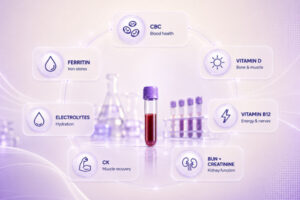
Our Runner’s Performance Blood Test includes a comprehensive panel of laboratory tests designed to assess key health markers that may influence endurance, recovery, hydration, muscle health, and overall athletic performance.
| Test | Why It Matters |
| Complete Blood Count (CBC) | Evaluates red blood cells, hemoglobin, and other blood components that support oxygen transport and screens for anemia. |
| Ferritin (Iron Storage) | Measures iron stores that are essential for oxygen delivery and endurance performance. |
| Vitamin D | Assesses vitamin D levels to support bone health, muscle function, and immune health. |
| Vitamin B12 | Evaluates vitamin B12 levels, which are important for red blood cell production, nerve function, and energy metabolism. |
| Electrolytes | Measures sodium and potassium to help assess hydration, muscle contraction, and nerve signaling. |
| Kidney Function (BUN & Creatinine) | Evaluates kidney health while providing insights into hydration status following endurance exercise. |
| Creatine Kinase (CK) | Measures muscle stress and recovery after strenuous exercise or prolonged training. |
The package includes the following tests, each selected to provide valuable insights into your overall health, nutritional status, hydration, muscle recovery, and athletic performance.
Complete Blood Count (CBC)
- A Complete Blood Count (CBC) measures red blood cells, white blood cells, hemoglobin, hematocrit, and platelets to provide a broad overview of your overall health.
- It helps assess oxygen-carrying capacity, immune function, and blood health, making it an important part of routine health screening for runners.
Ferritin (Iron Storage)
- Ferritin measures the amount of iron stored in your body.
- Since iron is essential for producing hemoglobin, this test helps evaluate your body’s iron reserves, which play an important role in oxygen transport during physical activity.
- Female runners, vegetarians, vegans, and high-mileage endurance athletes may be at an increased risk of iron deficiency, making regular blood testing particularly valuable.
Vitamin D
- This test measures your vitamin D levels to assess bone health, muscle function, and immune health.
- Maintaining adequate vitamin D levels is important for supporting an active lifestyle and long-term physical performance.
Vitamin B12
- Vitamin B12 testing evaluates levels of this essential nutrient, which supports red blood cell production, nerve function, and energy metabolism.
- It is particularly useful for identifying deficiencies that may affect overall health.
Electrolytes
- This test measures key electrolytes, including sodium and potassium, which help regulate hydration, muscle contraction, and nerve signaling.
- Maintaining electrolyte balance is especially important during prolonged or intense exercise.
Kidney Function (BUN & Creatinine)
- Kidney function testing measures Blood Urea Nitrogen (BUN) and Creatinine to evaluate how well your kidneys are functioning.
- These markers can also provide useful information about evaluating kidney function while providing insights into hydration status following prolonged endurance exercise.
Creatine Kinase (CK)
- Creatine Kinase (CK) is an enzyme released into the bloodstream following muscle activity.
- Measuring CK helps assess muscle stress and recovery after strenuous exercise or endurance training.
Package Pricing
Our Runner’s Performance Blood Test is available for ฿3,500 and includes all the laboratory tests listed above, along with a personalized medical review and recommendations from our healthcare team.
Additional Charges:
- Clinic Fee: ฿300
- Mobile Blood Collection (Bangkok): ฿1,250
Testing Requirements:
- No fasting required
- Results available within 24 hours
- Testing performed by an international-standard laboratory
- Available at our Bangkok clinics or through mobile booking
Once your results are available, our healthcare professionals will review each marker with you, explain what the findings mean, and provide personalized recommendations based on your overall health, training goals, and any identified abnormalities. This may include advice on nutrition, recovery, lifestyle modifications, or whether additional medical evaluation is recommended.
What To Expect
Getting your Runner’s Performance Blood Test at PrimeCare Bangkok is quick, convenient, and designed to fit your training schedule.
1. Book Your Appointment
Schedule your visit at our Bangkok clinic or choose our mobile blood collection service. No fasting is required for this package.
2. Blood Sample Collection
A trained healthcare professional will collect your blood sample, a process that typically takes 5–10 minutes.
3. Laboratory Analysis
Your sample is analyzed by an international-standard laboratory to assess key health markers, including iron stores, vitamins, electrolytes, kidney function, muscle recovery, and overall health.
4. Results Review & Personalized Recommendations
Your results are typically available within 24 hours. Our medical team will review your report, explain your results, and provide personalized recommendations to help support your health, recovery, and training goals.
Why Choose PrimeCare Bangkok for Runner’s Performance Blood Testing?
At PrimeCare Bangkok, we provide comprehensive blood testing for runners with fast turnaround times and personalized medical guidance to help you train and recover with confidence.
- Our comprehensive runner’s blood test package is designed specifically for runners, endurance athletes, and marathon training.
- Covers tests like CBC, Ferritin, Vitamin D, Vitamin B12, Electrolytes, Kidney Function (BUN & Creatinine), and Creatine Kinase (CK).
- Personalized results review with practical recommendations based on your health status and training goals.
- Results are typically available within 24 hours through an international-standard laboratory.
- No fasting required, making it easy to schedule around your training routine.
- Convenient testing options with in-clinic appointments or mobile blood collection across Bangkok.
- Experienced English-speaking healthcare professionals serving both local and international patients.
- Trusted medical clinic with 4.9-star patient ratings and two convenient locations in Sukhumvit and Sathorn.
Book Your Runner’s Performance Blood Test
Appointments are available at both PrimeCare Bangkok locations or through our convenient mobile blood collection service anywhere in Bangkok.
Whether you’re training for a 10K, half marathon, marathon, HYROX event, or another endurance challenge, or simply looking to optimize your health, our Runner’s Performance Blood Test provides valuable insights into your body’s nutritional status, recovery, and overall fitness.
Book your appointment at either the PrimeCare Bangkok clinic or arrange a convenient mobile blood collection anywhere in Bangkok.
Frequently Asked Questions (FAQs)
Q1: Is a blood test for endurance athletes available in Bangkok?
Ans: Yes, blood tests for endurance athletes are widely available in Bangkok. PrimeCare Bangkok offers a Runner’s Performance Blood Test designed for runners, endurance athletes, and individuals training for events such as marathons. The package evaluates key biomarkers, including iron stores, vitamin levels, electrolytes, kidney function, and muscle recovery, followed by a personalized medical review and recommendations based on your results.
Q2: Which are the important blood tests for athletes?
Ans: Important blood tests for athletes include a Complete Blood Count (CBC), Ferritin (iron stores), Vitamin D, Vitamin B12, Electrolytes, Kidney Function (BUN & Creatinine), and Creatine Kinase (CK). Together, these tests provide valuable information about oxygen transport, nutritional status, hydration, muscle recovery, and overall health, helping athletes monitor their well-being throughout training.
Q3: Why is a blood test for runners important?
Ans: Regular running places significant demands on the body, and some nutritional deficiencies or health changes may develop without obvious symptoms. A blood test helps assess important health markers such as iron levels, vitamins, hydration, kidney function, and muscle recovery, allowing runners to better understand their health and make informed decisions about training and recovery with medical guidance.
Q4: How often should athletes take a blood test?
Ans: The ideal frequency depends on your training schedule, medical history, and individual health needs. Many endurance athletes choose to have blood testing before a marathon or at the beginning of a training cycle to establish a baseline, followed by periodic testing to monitor important health markers. A healthcare professional can recommend a testing schedule based on your circumstances.
Q5: How can a blood test identify overtraining?
Ans: A blood test cannot diagnose overtraining syndrome on its own, but it can identify changes in biomarkers that may be associated with prolonged physical stress or inadequate recovery. Assessing markers such as Creatine Kinase (CK), iron stores, and nutritional status can help healthcare professionals evaluate whether further assessment or adjustments to your training and recovery plan may be appropriate.
Q6: Do runners need to check vitamin D and vitamin B12 levels?
Ans: Vitamin D and Vitamin B12 play important roles in bone health, muscle function, nerve health, red blood cell production, and energy metabolism. Testing these vitamin levels can help identify deficiencies that may affect overall health, particularly in runners with dietary restrictions, limited sun exposure, or symptoms suggestive of a deficiency.
Q7: Which blood markers are important for endurance athletes?
Ans: Several blood markers provide valuable insights into an endurance athlete’s health. These include Complete Blood Count (CBC), Ferritin, Vitamin D, Vitamin B12, Electrolytes, Kidney Function (BUN & Creatinine), and Creatine Kinase (CK). Together, they help assess oxygen-carrying capacity, nutritional status, hydration, muscle recovery, and overall health.
Q8: Can blood tests detect dehydration in runners?
Ans: Blood tests can provide useful information about hydration status by evaluating markers such as electrolytes and kidney function (BUN & Creatinine). While these results should always be interpreted alongside your medical history and clinical assessment, they can help healthcare professionals identify changes that may be related to dehydration following prolonged or intense exercise.
Q9: Should recreational runners have regular blood tests?
Aas: Yes. Recreational runners can benefit from regular blood testing, even if they are not training competitively. It can help monitor important health markers such as iron levels, vitamin status, hydration, and kidney function, while identifying nutritional deficiencies that may affect energy levels, recovery, or overall health. Regular testing also provides a useful baseline to track changes over time.
Q10: Can beginner runners benefit from performance blood testing?
Ans: Yes. Performance blood testing can help beginner runners understand their baseline health before starting a training program. Identifying nutritional deficiencies or abnormal health markers early allows appropriate medical guidance, helping you train more safely and monitor how your body adapts as your running routine progresses.
Q11: What should I do if my blood test shows abnormal results?
Ans: If your blood test shows abnormal results, our healthcare team will explain what the findings mean and discuss the most appropriate next steps. Depending on your results, recommendations may include dietary or lifestyle changes, repeat testing, additional investigations, or treatments such as iron infusions, vitamin injections, or IV drips when clinically indicated.
Q12: What is the average cost of a blood test for runners at PrimeCare?
Ans: At PrimeCare Bangkok, the Runner’s Performance Blood Test costs ฿3,500. The package includes a comprehensive laboratory assessment, a personalized medical review, and recommendations based on your results. Additional charges include a clinic fee of ฿300 or ฿1,250 for mobile blood collection within Bangkok.
Q13: Should I have my blood test before or after a marathon?
Ans: Both can be beneficial, depending on your goals. A pre-marathon blood test helps identify nutritional deficiencies or other health concerns before race day, while post-marathon testing can assess hydration, kidney function, and muscle recovery after prolonged endurance exercise.
Q14: Can iron deficiency affect running performance?
Ans: Yes. Iron deficiency can reduce your body’s ability to produce hemoglobin, limiting oxygen delivery to working muscles. This may contribute to fatigue, reduced endurance, and slower recovery. A blood test measuring ferritin and other iron-related markers can help identify low iron stores and determine whether further medical evaluation is needed.
Q15: Why do runners develop iron deficiency?
Ans: Runners may develop iron deficiency because endurance training can increase the body’s iron requirements. Factors such as dietary intake, repeated high-mileage training, and individual health conditions may also contribute. Female runners, vegetarians, vegans, and endurance athletes are often at a higher risk and may benefit from regular blood testing.
Q16: Is ferritin more important than hemoglobin for runners?
Ans: Ferritin and hemoglobin measure different aspects of iron health, and both are important. Ferritin reflects your body’s iron stores, while hemoglobin measures your blood’s oxygen-carrying capacity. Assessing both markers provides a more complete picture of iron status and helps healthcare professionals identify iron deficiency more effectively.