
 English
 Hindi
Hindi Arabic
 Bengali
 Chinese
 French
 German
 Italian
 Japanese
 Korean
 Russian
 Spanish
 Thai
Thai Vietnamese

Feeling exhausted no matter how much you rest? It might be tempting to blame a busy schedule, but persistent tiredness isn’t always “just stress.” Sometimes, your body is signalling burnout. Other times, it could be fatigue caused by an underlying health condition.
Although burnout and fatigue can feel similar, they have different causes, and understanding the difference is key to getting the right support. In this blog, we’ll break down the signs of each, explain what your symptoms could mean, and help you know when it’s time to consider a medical evaluation.
What is Burnout?
Burnout is a state in which an individual experiences mental, emotional, and physical exhaustion caused by chronic or uncontrolled stress. It develops over time and may negatively influence your energy levels, motivation, concentration, and general well-being.
Burnout is not just fatigue after a busy day. This is a condition when your body cannot cope with long-term stress and becomes worn out due to prolonged exposure to stress factors.
Though burnout is usually linked to work-related problems, this condition is not confined to the work environment only.
Parents, nurses, teachers, students, and any person who has numerous responsibilities may face burnout and its consequences, which include decreased motivation, lack of concentration, and inability to take pleasure from activities you used to like.
It should be noted that many symptoms of burnout are similar to some medical conditions, such as anaemia, hyperthyroidism, vitamin deficiency, or diabetes. If your exhaustion is not cured after rest or vacation, you should see a doctor to make sure there is no underlying medical issue.
Common Symptoms of Burnout
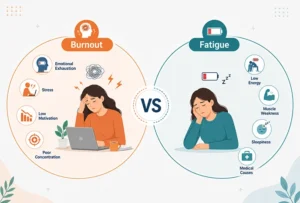
Burnout symptoms include persistent exhaustion, emotional detachment, reduced motivation, poor concentration, irritability, sleep disturbances, and declining productivity. These symptoms usually develop gradually and can affect both your mental and physical well-being.
Common symptoms of burnout include:
- Persistent exhaustion: Feeling mentally and physically drained, even after adequate rest.
- Emotional detachment: Feeling disconnected from work, responsibilities, or people around you.
- Loss of motivation: Losing interest in tasks or activities you once enjoyed.
- Poor concentration: Difficulty focusing, remembering information, or making decisions.
- Reduced productivity: Struggling to complete tasks efficiently or meet deadlines.
- Increased irritability: Becoming easily frustrated, impatient, or emotionally reactive.
- Sleep disturbances: Trouble falling asleep, staying asleep, or waking up feeling unrefreshed.
- Physical symptoms: Frequent headaches, muscle tension, digestive discomfort, or recurring minor illnesses.
- Feeling overwhelmed: Even simple daily responsibilities feel mentally or emotionally exhausting.
- Social withdrawal: Avoiding colleagues, friends, or family due to emotional fatigue or lack of energy.
Is Fatigue Different From Burnout?
While burnout is mostly caused by stress and mental overload, fatigue can be mostly connected with physical problems. Factors like insomnia, dehydration, lack of nutrients, infection, use of certain medications, diseases like anaemia, thyroid conditions, and diabetes may cause fatigue.
Fatigue is the state of persistent lack of energy that cannot be relieved through resting or sleeping. Different from ordinary tiredness, it can affect a person’s activities and may be a sign of some hidden health issues.
The feeling of being sleepy after a hectic day is a natural occurrence, but fatigue is something else. This is an ongoing feeling of being worn out, tired, and lacking energy for performing even easy tasks. Being affected by fatigue, you will experience difficulty in performing your regular activities and focusing on them, despite having a sufficient amount of rest.
Common Symptoms of Fatigue
Common symptoms of fatigue include persistent low energy, muscle weakness, reduced stamina, daytime sleepiness, and difficulty concentrating. These symptoms can affect your physical performance as well as your ability to stay alert and focused.
Common symptoms of fatigue include:
- Persistent low energy throughout the day
- Muscle weakness or feeling physically drained
- Reduced stamina during routine activities
- Daytime sleepiness, even after adequate sleep
- Difficulty concentrating or experiencing brain fog
- Shortness of breath during mild physical activity
- Dizziness or lightheadedness
- Slower recovery after exercise or illness
- Lack of motivation due to low energy
- Feeling unwell without an obvious reason
If fatigue lasts for several weeks or doesn’t improve with rest, consult a healthcare provider to rule out any underlying medical conditions.
Understanding the Difference: Burnout vs Fatigue
Burnout arises from stress, while fatigue results from persistent feelings of tiredness due to physical, psychological, or physiological conditions. The fact that the two conditions resemble each other does not mean that it is not crucial to distinguish between them in order to get the appropriate remedy.
Exhaustion may make one confused about the condition he or she is facing, whether it is due to months of stress that affect one psychologically or whether it is a message from the body about other issues. Burnout and fatigue may appear very similar on the outside, but they do not arise from the same causes.
Simply put, burnout drains one emotionally and psychologically, whereas fatigue drains one physically. Of course, both conditions may overlap. Here is a tabular representation of the difference:
| Burnout | Fatigue |
| Triggered by prolonged stress | Often linked to physical or medical causes |
| Emotional, mental, and physical exhaustion | Persistent lack of energy or stamina |
| Often causes loss of motivation and emotional detachment | Commonly causes weakness, sleepiness, and low stamina |
| May improve with stress management | Often requires identifying and treating the underlying cause |
Medical Conditions That Can Mimic Burnout
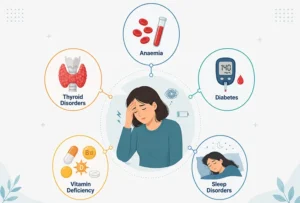
Not all fatigue results from stress. Anaemia, hyper/hypothyroidism, diabetes, deficiency in vitamins, as well as sleep disorders may produce symptoms similar to those experienced during burnout. It is quite natural to think that you are burnt out, feeling exhausted, but there might be something else going on in your body.
Several health problems have symptoms which are very similar to those of burnout and which make it hard to distinguish between these two without professional examination. Such diseases include:
- Anaemia: It makes people feel weak and short of breath;
- Hyper/hypothyroidism: They affect patients’ energy levels, mood, and concentration abilities;
- Diabetes: The changing levels of glucose lead to chronic fatigue;
- Deficiency in Vitamin B12 or Vitamin D: This condition is also associated with feelings of exhaustion and low levels of energy;
- Sleep disorders: Low-quality sleep causes the same effect even if you are resting at night.
The good thing about this situation is the fact that many of these disorders can be detected through a few diagnostic tests.
When Should You Consider a Medical Evaluation?
Should your tiredness persist despite sufficient resting, extend for several weeks, or include some other worrying signs, it would be a good idea to consult your doctor.
It is quite normal that everyone has a few exhausting days. However, when fatigue persists every day and cannot be overcome with rest or sleep, it would be reasonable to pay attention to it and try to find out what is happening.
Consult a doctor if you experience any of the following:
- Fatigue lasting for two to four weeks or even more
- Feeling tired despite sufficient sleep or rest
- Breathlessness while performing routine tasks
- Dizziness
- Unexplained weight loss
- Brain fogginess, problems with concentration
- Frequent infections, difficulty recovering from illness
- Not having enough strength to do your usual tasks
Such an examination would help you to determine whether the problem is associated only with stress and burnout or there is also something wrong with your health.
Frequently Asked Questions (FAQs)
Q1: How to cure burnout?
Ans: The process of recovering from burnout begins by recognising and correcting the cause of the chronic stress. Ensuring that one gets enough rest, setting limits, taking breaks regularly, balancing life and seeking help from a medical professional or mental health expert are beneficial. If you continue having these problems even after doing all that, then a medical assessment should be conducted to check for any medical issues.
Q2: How to deal with burnout at work?
Ans: When dealing with burnout at work, the key steps include having reasonable expectations, taking breaks, delegating responsibilities whenever possible and having a balance between work and life.
Q3: How to avoid burnout?
Ans: Your chance of developing burnout can be reduced by achieving a proper work-life balance, ensuring sufficient rest and sleep, physical exercise, proper nutrition, frequent rest throughout the day, and dealing with stress in its early stages. It is also essential to recognise the early symptoms of burnout and take appropriate action.
Q4: How to deal with adrenal fatigue?
Ans: Despite the common usage of the concept of adrenal fatigue, there is no official recognition of this phenomenon as a medical disorder among reputable health organisations. Chronic fatigue should never be considered a result of adrenal fatigue until proper testing is done. If you suffer from constant fatigue, make sure to visit your doctor for a check-up for possible health disorders like hypothyroidism, anaemia, diabetes, vitamin deficiency, and others.
Q5: Can burnout turn into depression?
Ans: Burnout and depression are separate problems, but burnout that continues over an extended period of time may increase the chance of someone becoming depressed. It is crucial to get professional help when there is a worsening of feelings such as sadness or a lack of interest.
Q6: How long does burnout usually last?
Ans: Recovery from burnout takes varying amounts of time and has no set deadline. In milder cases, burnout may be resolved in a few weeks through appropriate rest and changes in lifestyle. In other cases, more severe burnout may require several months to recover.
Q7: Can burnout cause anxiety?
Ans: Yes. Chronic stress associated with burnout can contribute to feelings of anxiety, excessive worry, irritability, and difficulty relaxing. However, anxiety can also occur independently, so persistent or severe symptoms should be evaluated by a healthcare professional.
Q8: Can lifestyle habits contribute to chronic fatigue?
Ans: Yes. Poor sleep, an unbalanced diet, dehydration, physical inactivity, excessive alcohol consumption, and chronic stress can all contribute to persistent fatigue. However, if fatigue continues despite adopting healthier lifestyle habits, a medical evaluation is recommended to identify any underlying health conditions.