
 English
 Hindi
Hindi Arabic
 Bengali
 Chinese
 French
 German
 Italian
 Japanese
 Korean
 Russian
 Spanish
 Thai
Thai Vietnamese

Before heading on a trip, people usually check their passports and make sure it’s valid, but they often forget to think about their health.
This isn’t because they’re careless; it’s simply because travel health is often seen as optional until something goes wrong.
Below is a checklist of what people typically overlook, and why these things are more important than many realize.
Vaccinations: Not Just for Exotic Destinations
One common error travelers make is believing that vaccinations are only necessary for trips to developing countries.
In reality, several routine vaccines, including Hepatitis A, Typhoid, and Influenza, should be reviewed before any international travel, including trips to popular cities.
Another mistake is waiting too late.
Some vaccines require multiple doses spaced weeks apart. Schedule a doctor’s consultation 4-6 weeks before departure to allow enough time for proper administration.
If you’re traveling to or from Bangkok, PrimeCare’s vaccination packages include the most common travel vaccines and can be customized based on your destination.
A Pre-Travel Blood Test
If you are managing a chronic illness, taking regular medications, or haven’t had a medical check-up in the past year, getting a blood test before your trip is helpful.
Checking thyroid function, blood sugar levels, and kidney markers can be important, especially if your trip involves crossing time zones.
Travel Insurance and Medical Fitness Are Not the Same Thing
Having travel insurance does not mean you are medically prepared for the flight.
Most standard policies exclude pre-existing conditions that were not declared at the time of booking. If your condition worsens abroad, the insurance coverage you thought you had may not apply.
A medical certificate confirming your fitness to fly may also be required by airlines for passengers with recent surgery, heart issues, respiratory problems, or an active infection.
It’s advisable to ask your doctor whether this applies to your situation before you reach the check-in counter.
Medications
Some medications, especially controlled substances, opioid-based pain relievers, and high-dose stimulants, require a prescription letter to pass customs in many countries.
Try to keep medications in their original packaging.
If you are managing a complex condition, carry a copy of the prescription and a brief summary of your medical situation.
The Bangkok-Specific Consideration
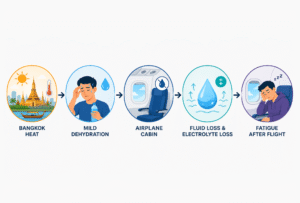
For those who have been living in Bangkok for some time, there are a few key factors to consider before a long flight.
Dehydration is quite common in the heat, and it can worsen quickly due to the low humidity in airplane cabins. If you’re slightly dehydrated without realizing it, the effects can become more noticeable at high altitudes.
IV hydration therapy in the 24 to 48 hours before a long-haul flight can help restore electrolyte balance and reduce the fatigue that often comes after long flights.
It’s a practical option for anyone planning to spend 10 or more hours in a pressurized cabin.
The Pre-Flight Checklist That Actually Matters
Before you travel, confirm that you have:
- Up-to-date vaccinations relevant to your destination
- Enough prescription medication for the trip plus
- A prescription letter for any controlled medications
- A health screening within the past twelve months
- Medical fitness confirmation if you’ve had any major health event in the past six months
- A clear understanding of your travel insurance exclusions
- None of these items take much time to organise if you plan ahead.
The issue is that most people only think about them once they are already at the airport.
The time before your trip is the best time to handle all these matters.