
 English
 Hindi
Hindi Arabic
 Bengali
 Chinese
 French
 German
 Italian
 Japanese
 Korean
 Russian
 Spanish
 Thai
Thai Vietnamese

There’s an entire economy built around curing hangovers: pills, powders, IV drips, elaborate breakfast rituals, and most of it rests on shakier evidence than the confidence behind it. The actual physiology of a hangover is fairly well understood, and only a handful of things reliably help. The rest is mostly ritual.
What’s Actually Happening in Your Body?
A hangover isn’t just dehydration, though dehydration plays a role. Alcohol disrupts sleep quality even when it helps you fall asleep faster, irritates the stomach lining, causes blood sugar to dip, and triggers an inflammatory response that contributes to the headache, fatigue and general malaise the next day. This combination is why a hangover can feel like several different problems at once, because it is.
What Genuinely Helps?

Rehydrating is one of the few interventions with consistent support, since alcohol increases urine output and contributes to fluid loss. Plain water works; drinks with electrolytes can help if vomiting or significant fluid loss is involved, but neither is a fast fix; rehydration works over hours, not minutes.
Eating something, particularly foods with some carbohydrate content, can help address the blood sugar dip that contributes to shakiness and fatigue. Bland, easily tolerated food tends to sit better than anything heavy or greasy, despite the popularity of greasy “hangover breakfasts.”
Rest matters more than most remedies people reach for first. Alcohol reduces the restorative quality of sleep even on nights when it doesn’t reduce total sleep time, so allowing extra rest the next day gives your body more room to recover than trying to push through on caffeine alone.
General over-the-counter pain relief can help with headache and body aches for some people, but this is worth a word of caution rather than a specific recommendation: certain pain relievers can be harder on the stomach or liver when combined with alcohol still in your system, so checking with a pharmacist or your usual healthcare provider about what’s appropriate for you individually is more reliable than following a generic recommendation online.
When a Supervised Option Might Make Sense?
There’s a particular version of a hangover where water won’t stay down no matter how carefully you sip it, and lying very still feels like the only viable plan. That’s the point where trying to power through with a glass of water on the nightstand stops being realistic, and a supervised option starts to make more sense. In Bangkok, PrimeCare’s Hangover IV Drip Therapy (฿2,500, plus a clinic or home-delivery fee) delivers fluids, electrolytes and anti-nausea support straight into the bloodstream, administered by clinical staff either at their clinic or brought to wherever you’re lying still. It isn’t a shortcut that beats fluids and rest for an ordinary hangover, it’s simply a more practical option for the specific, less common situation where keeping anything down orally has stopped being possible.
What Doesn’t Hold Up?
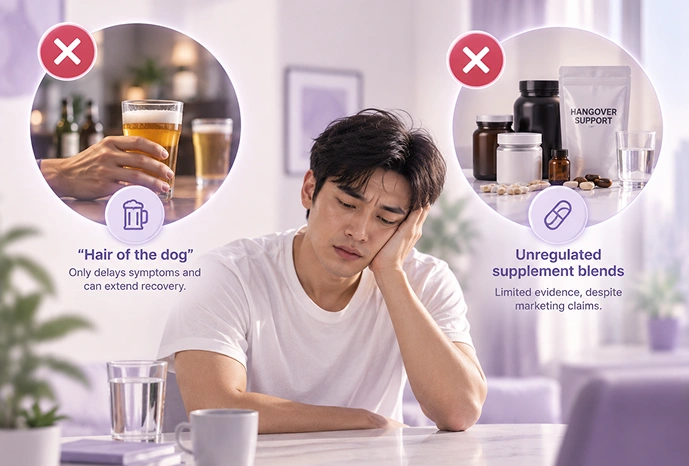
“Hair of the dog” having another drink to feel better only delays symptoms by keeping alcohol in your system; it doesn’t address the underlying cause and can extend the recovery process rather than shorten it.
Unregulated hangover supplement blends bought without any clinical oversight generally don’t have strong evidence behind them individually. Some ingredients used in these products have plausible mechanisms in early research, but “plausible mechanism” and “proven to work” are different things, and most of these products haven’t been tested rigorously against a placebo.
When It’s More Than a Hangover
Ordinary hangover symptoms like headache, fatigue, nausea, sensitivity to light, are unpleasant but not dangerous, and typically improve within a day. Seek emergency medical attention if someone shows signs that go beyond a normal hangover: repeated vomiting that won’t stop, confusion or difficulty staying awake, slow or irregular breathing, seizures, bluish or pale skin, or unresponsiveness. These can indicate alcohol poisoning, which is a medical emergency regardless of how “used to drinking” the person normally is.
It’s also worth a moment of honest reflection if hangovers are becoming a frequent part of your routine rather than an occasional one. That pattern is worth discussing with a healthcare professional, not because one hangover means anything is wrong, but because frequency is a more useful signal than any single episode.
A Final Note
Most of what reliably helps a hangover is unglamorous: water, food, rest, and time. If you’re prone to hangovers and want to reduce how often they happen, drinking in moderation, alternating alcoholic drinks with water, and eating beforehand are more effective starting points than any recovery product. And if symptoms ever look more severe than a typical hangover, that’s a reason to seek medical care rather than wait it out. This article is general health information and isn’t a substitute for individual medical advice.
Frequently Asked Questions
Q1. What actually helps a hangover?
Ans1. Rehydration, eating something with a bit of carbohydrate, and rest are the interventions with the most consistent support. General over-the-counter pain relief can help some people with headache and aches, but it’s worth checking with a pharmacist about what’s appropriate given alcohol is still in your system.
Q2. Does “hair of the dog” really work?
Ans2. Not in the way it’s often described. Having another drink can temporarily mask symptoms by keeping alcohol in your system, but it delays rather than resolves the recovery process, and can extend how long you feel unwell overall.
Q3. Do hangover IV drips, or vitamin injections work better than water and food?
Ans3. The evidence that they outperform plain rehydration and rest is limited. They may feel effective partly due to the fluid volume involved, similar to drinking water, but they come with additional cost and small risks that oral rehydration doesn’t.
Q4. How long does a hangover usually last?
Ans4. Most hangovers improve significantly within 24 hours, though this varies by individual and how much was consumed. Symptoms lasting substantially longer, or that seem to be getting worse rather than better, are worth medical attention rather than waiting out.
Q5. How do I know if it’s a hangover or something more serious like alcohol poisoning?
Ans5. A typical hangover involves headache, fatigue, nausea, and light sensitivity that gradually improve. Warning signs that go beyond this, repeated vomiting, confusion, slow or irregular breathing, seizures, bluish skin, or unresponsiveness, indicate a medical emergency and need immediate care, not home remedies.