
 English
 Hindi
Hindi Arabic
 Bengali
 Chinese
 French
 German
 Italian
 Japanese
 Korean
 Russian
 Spanish
 Thai
Thai Vietnamese

Maria had been getting headaches almost every other day for about three weeks. She assumed it was work stress, long hours, back-to-back video calls, not enough sleep, so she kept a bottle of paracetamol in her desk drawer and pushed through. It wasn’t until a friend asked, “wait, how long has this been going on?” that she realised she couldn’t actually remember the last headache-free week.
Frequent headaches are common, and it’s true that stress plays a role for a lot of people. Yet “it’s probably just stress” is often a guess, not an answer. Headaches that keep coming back can have several different causes, and figuring out which one applies to you usually needs more than self-diagnosis from a search engine.
Why Do I Keep Getting Headaches?
Recurring headaches usually mean something in your daily pattern: sleep, hydration, screen time, posture, caffeine intake, or stress load, is consistently triggering pain, or that you have an underlying headache disorder such as migraine or tension-type headache. In some cases, frequent use of over-the-counter painkillers is itself part of the problem. The only way to know which of these applies to you is to look at the pattern over time, not a single episode.
Common Reasons Behind Frequent Headaches
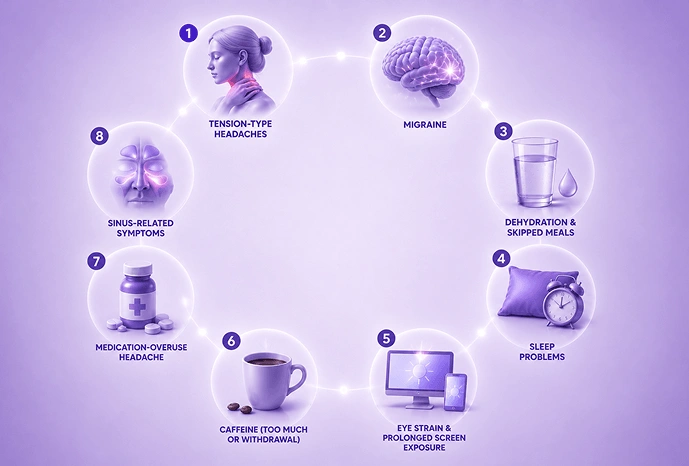
- Tension-type headaches are the most common form and often feel like a tight band around the head. They’re linked to muscle tension in the neck and scalp, often from stress, poor posture, or long hours at a desk.
- Migraine is different from a “bad headache.” It typically involves moderate-to-severe throbbing pain, often on one side, and can come with nausea, light sensitivity, or visual disturbances. Migraine is frequently under-recognised because people assume it always looks dramatic, it doesn’t always.
- Dehydration and skipped meals are simple but genuinely common triggers, especially in hot, humid climates or after a night of poor sleep.
- Sleep problems like too little sleep, irregular sleep timing, or undiagnosed sleep issues are strongly linked to headache frequency.
- Eye strain and prolonged screen exposure can bring on headaches that build gradually through the day, especially with poor lighting or uncorrected vision.
- Caffeine cuts both ways: too much can trigger headaches, and cutting it out abruptly can cause withdrawal headaches.
- Medication-overuse headache can develop when painkillers are used very frequently to manage headaches, which paradoxically makes headaches more frequent over time. This is one of the more overlooked causes.
- Sinus-related symptoms are less often the true cause than people assume. Genuine sinus headaches usually come with signs of active sinus infection, such as facial pressure, nasal congestion and fever, not just head pain.
This isn’t a complete list, and identifying which of these, or something else applies to you isn’t something an article can do. That’s the point of an actual assessment.
When a Headache May Need Medical Attention?
A single headache after a stressful day usually isn’t cause for concern. But it’s reasonable to ask a healthcare professional to take a closer look if your headaches are becoming more frequent, lasting longer, changing in character, or simply don’t feel like your “usual” headache anymore. The same applies if they’re starting to interfere with work, sleep, or daily activities, or if you find yourself relying on painkillers several days a week. None of this means something serious is happening, but a pattern that’s shifting is worth having evaluated rather than managed indefinitely on your own.
When Is a Headache an Emergency?
Most headaches, even frequent ones, are not medical emergencies. But certain symptoms warrant urgent attention. Seek urgent medical attention if you experience:
- A sudden, extremely severe headache that reaches maximum intensity within seconds, often described as the worst headache of your life
- A headache following a significant head injury
- Headache along with weakness, numbness, difficulty speaking, confusion, or loss of consciousness
- A new headache with sudden vision changes
- Headache with fever and a stiff neck
- A headache during pregnancy or shortly after childbirth, especially with swelling, visual changes, or severe pain
- Any new headache pattern that is rapidly worsening
These signs don’t confirm a diagnosis on their own, but they mean the situation should be assessed promptly rather than waited out.
What Can You Do If You Keep Getting Headaches?
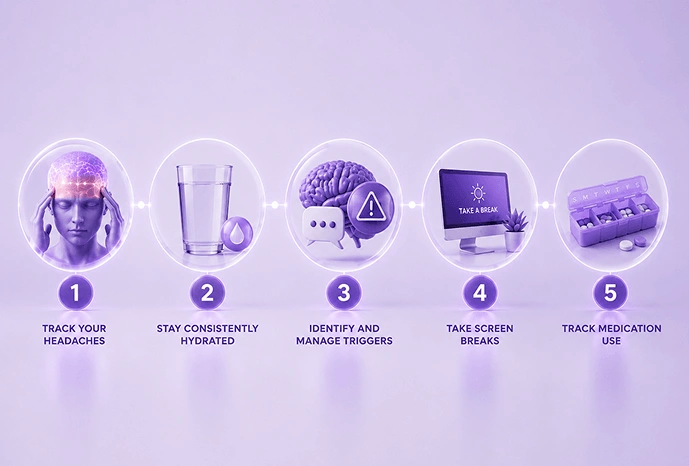
A few general habits can help you understand your own pattern, even before you see anyone:
- Keep a simple headache diary, when it starts, how long it lasts, and what you were doing beforehand
- Notice possible triggers: sleep, meals, screen time, caffeine, stress, or your menstrual cycle
- Stay consistently hydrated rather than catching up after the fact
- Aim for regular sleep timing, not just enough hours
- Take screen breaks, particularly during long work sessions
- Track how often you’re using painkillers, and mention this honestly to a healthcare professional
None of this replaces a proper evaluation, it just gives whoever assesses you something concrete to work with.
A Final Note
Headaches are easy to normalise, especially when they’re not severe enough to stop you in your tracks. But a headache pattern that’s changing or becoming more frequent is your body flagging something worth understanding, not just enduring. If that sounds like what you’re experiencing, a conversation with a qualified healthcare professional is a reasonable next step, this article, like any general health information online, isn’t a substitute for that.
Frequently Asked Questions
Q1. Can stress cause frequent headaches?
Ans 1.Yes, stress is a well-recognised trigger, particularly for tension-type headaches. But stress rarely acts alone, it usually combines with poor sleep, skipped meals, or muscle tension.
Q2. Can dehydration cause headaches?
Ans 2. Yes. Even mild dehydration can trigger headaches, and this is often underestimated as a cause of “random” headaches.
Q3. What’s the difference between migraine and a regular headache?
Ans 3. Migraine typically involves more intense, often one-sided, throbbing pain, and may include nausea or sensitivity to light and sound, features a typical tension headache doesn’t usually have.
Q4. When should I see a doctor for headaches?
Ans 4. If headaches are becoming more frequent, more severe, changing in pattern, or affecting your daily life, it’s reasonable to get them assessed rather than continuing to self-manage.
Q5. Can frequent headaches be a sign of something serious?
Ans 5. Occasionally, yes, but most frequent headaches are due to common, manageable causes. The point of getting evaluated isn’t to assume the worst; it’s to find out what’s actually going on.