
What’s the Difference and Which One Should You Be Testing For?
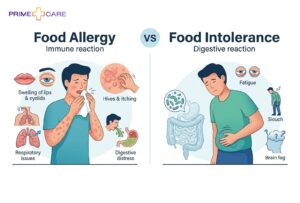
Bloating after meals. Unexplained rashes. Fatigue that doesn’t improve.
Many people suspect food as the trigger, but testing the wrong thing can lead to confusion,
unnecessary food restriction, and missed answers.
Understanding the difference between food allergy and food intolerance helps you choose
The right evaluation avoids guesswork.
Food Allergy: An Immediate Immune Reaction
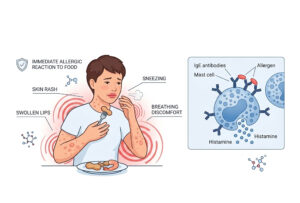
A food allergy occurs when the immune system overreacts to a specific food protein through
an IgE-mediated mechanism. This triggers the release of histamine and other inflammatory
mediators.
Symptoms usually appear quickly, within minutes to a few hours, and may include:
- Hives, itching, or swelling of the lips and eyelids
- Sneezing, wheezing, or shortness of breath
- Nausea, vomiting, or abdominal pain
- In severe cases, anaphylaxis
Because reactions can be unpredictable and potentially serious, identifying true food
allergens is important for safety.
Testing:
Food allergy is evaluated with Allergen-Specific IgE testing, interpreted together with clinical
history. This remains the standard approach in conventional allergy practice.
Food Intolerance: A Delayed, Dose-Dependent Response
Food intolerance does not involve IgE antibodies and is not life-threatening, but it can
significantly affect daily well-being.
Symptoms are often delayed, appearing hours or even days after eating, which makes
triggers harder to identify. Common symptoms include:
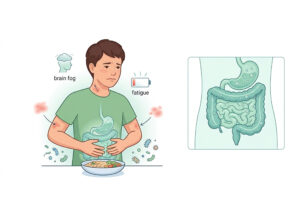
- Bloating, gas, abdominal discomfort
- Diarrhea or constipation
- Headaches or brain fog
- Fatigue
- Skin flares or acne
Food intolerance is frequently dose-dependent; small amounts may be tolerated, while
Repeated or larger exposure leads to symptoms.
Evaluation:
Food intolerance may be explored using IgG-based tests as a supportive tool, alongside
careful clinical assessment, elimination, and systematic reintroduction.
IgG testing is not a diagnostic test on its own and should be used to help structure dietary
evaluation — not to label foods as permanently “bad.”
Which One Should You Be Testing For?
The appropriate evaluation depends on your symptom pattern.
You may need food allergy (IgE) testing if you experience:
- Rapid reactions after eating
- Hives, swelling, or breathing symptoms
You may benefit more from a food intolerance evaluation if you have:
- Ongoing bloating or digestive discomfort
- Fatigue or brain fog
- Skin issues without immediate reactions
In some cases, both approaches are appropriate, especially when symptoms are mixed or
long-standing.
Stop Guessing. Start Understanding.
If food seems to be affecting how you feel — but the pattern isn’t clear — the right evaluation
can make a meaningful difference.