 English
 Hindi
 Arabic
 Bengali
 Chinese
 French
 German
 Italian
 Japanese
 Korean
 Russian
 Spanish
 Thai
 Vietnamese

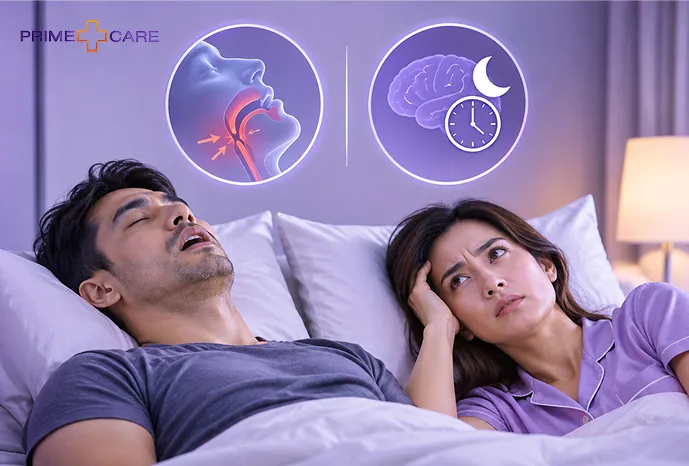
You’re in bed by 10:30 and up at 6:30, yet you drag through the morning as if you barely slept. Maybe you keep waking during the night, or your partner says you snore and sometimes seem to stop breathing. It’s natural to call this insomnia, and sometimes it is. Other times, a different problem, such as sleep apnea, is breaking up your sleep, and the two can look surprisingly alike. Working out which one you’re dealing with, or whether it’s both, changes what actually helps.
Sleep Apnea vs Insomnia: What’s the Difference?
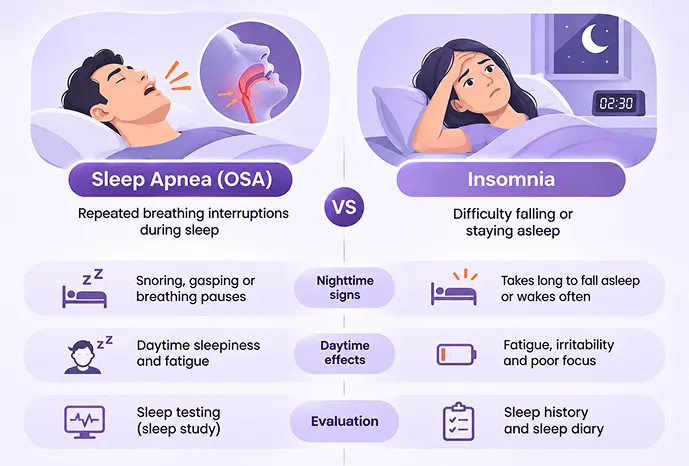
Insomnia is difficulty falling asleep, staying asleep, or getting back to sleep, while obstructive sleep apnea (OSA) is repeated blocking of the upper airway during sleep that interrupts breathing.
Insomnia is defined by its pattern: trouble sleeping at least three nights a week, and it’s considered chronic when that lasts three months or longer. A few bad nights don’t qualify. Common contributors include stress, irregular schedules, caffeine or alcohol, certain medications, pain, other medical conditions, and other sleep disorders. It isn’t a lack of discipline.
With OSA, the airway repeatedly narrows or closes during sleep, briefly disrupting breathing and sleep. Many people never remember these interruptions, and OSA isn’t limited to people who are older, male, or overweight.
| Sleep apnea | Insomnia | |
| Main problem | Repeated breathing interruptions during sleep | Trouble falling or staying asleep |
| Nighttime signs | Snoring, gasping, witnessed pauses in breathing | Slow to fall asleep, frequent or early waking |
| Daytime effects | Sleepiness, fatigue, poor concentration | Fatigue, irritability, poor concentration |
| Evaluation | Clinical assessment, plus sleep testing when indicated | Sleep history, medical review, sleep diary |
| Sleep study needed? | Objective testing is used to diagnose suspected OSA | Usually not for uncomplicated insomnia |
Why the Symptoms Can Overlap
Yes, sleep apnea can look like insomnia, because repeated sleep interruptions cause night waking, unrefreshing sleep, and daytime fatigue.
Someone with sleep apnea may wake several times a night and reasonably describe it as insomnia. Both conditions can also bring irritability and poor concentration, and they can coexist, so finding one doesn’t rule out the other. That doesn’t mean unexplained insomnia is secretly sleep apnea. It means the full pattern of symptoms matters.
Signs That May Point to Sleep Apnea
Loud, habitual snoring together with gasping, choking or breathing pauses that a bed partner notices are the best-known signals.
Other possible signs include:
- Waking repeatedly during the night
- Morning headaches or a dry mouth on waking
- Daytime sleepiness or fatigue
- Difficulty concentrating
Snoring alone doesn’t mean sleep apnea, and these signs have other possible causes.
Signs That May Point to Insomnia
Insomnia usually shows up as trouble falling asleep, staying asleep or getting back to sleep after waking too early.
Many people also wake unrefreshed and notice fatigue, irritability or poor concentration the next day. Keeping a sleep diary for a week or two, noting bedtimes, wake times, naps, caffeine and alcohol, helps a clinician see the pattern.
How Can a Sleep Study Help?
A sleep study records what your body does during sleep, which can show whether something like sleep apnea is disrupting it.
Depending on the test, it may track breathing, oxygen levels, heart rate, brain activity, eye and muscle movement and sleep stages. There are two main types:
- In-lab polysomnography (PSG): an overnight study in a sleep facility that records many signals. It’s considered the standard diagnostic test when sleep apnea is suspected after a comprehensive sleep evaluation.
- Home sleep apnea testing (HSAT): a portable device used at home. It can be appropriate for selected adults without other significant medical conditions who are at increased risk of moderate to severe OSA, but it records fewer signals and isn’t suitable for everyone.
If a home test is negative, inconclusive or technically inadequate, an in-lab study is recommended. Smartwatches and sleep apps aren’t a substitute for medical testing.
Does Everyone With Insomnia Need a Sleep Study?
No. Uncomplicated insomnia is usually assessed through a sleep history, a medical and medication review and often a sleep diary, not an overnight test.
A sleep study may be considered when another sleep disorder is suspected, such as snoring with gasping, witnessed breathing pauses or persistent unexplained daytime sleepiness. When severe insomnia or significant medical conditions are present, a clinician chooses the type of test rather than defaulting to a home device, since in-lab testing is generally preferred in those situations. A sleep study also can’t diagnose insomnia itself, and it isn’t a universal test for every cause of fatigue. Results only make sense alongside your symptoms and history.
What Happens After a Sleep Assessment?
Treatment depends on the condition found and your individual assessment, which is why the right diagnosis comes first.
Sleep apnea may be managed with positive airway pressure therapy, oral appliances, or other clinician-directed options. Chronic insomnia is commonly treated with cognitive behavioral therapy for insomnia (CBT-I), alongside attention to whatever is contributing. Some people need evaluation for both, and sleeping pills aren’t the standard first answer for insomnia.
When Should You Speak With a Doctor?
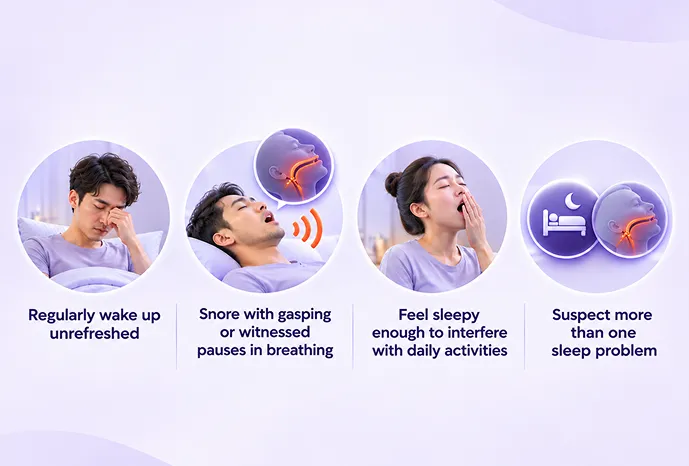
Speak with a doctor if poor sleep persists and affects your work, mood, or daily life.
Consider an appointment if you:
- Regularly wake up unrefreshed
- Snore with gasping or witnessed pauses in breathing
- Feel sleepy enough to interfere with daily activities
- Suspect more than one sleep problem
If you’re struggling to stay awake, don’t drive or operate machinery until you’ve been assessed.
Look for the Reason, Not Just the Hours
Hours in bed tell only part of the story. What matters more is why sleep is being disrupted, whether that’s insomnia, sleep apnea or both. If persistent poor sleep, loud snoring or breathing interruptions are affecting your rest, a medical consultation can help determine whether further sleep evaluation is appropriate. You can see PrimeCare’s services or its sleep testing package page for details.
Frequently Asked Questions
Q1. Why am I tired after a full night in bed?
Ans. Possible reasons include sleep apnea, other sleep disorders, insomnia, medications and medical conditions. Time in bed doesn’t equal sleep quality, and symptoms alone can’t tell these apart.
Q2. Does snoring mean I have sleep apnea?
Ans. Not necessarily. Snoring is common, but snoring with gasping, witnessed pauses or heavy daytime sleepiness deserves assessment.
Q3. What happens during a sleep study?
Ans. In a lab study, sensors record breathing, oxygen, heart rate, brain activity and movement overnight while a technologist monitors. A home test uses a portable device in your own bed, with instructions beforehand.
Q4. What’s the difference between a home sleep apnea test and polysomnography?
Ans. Polysomnography records more signals and is the standard test, while a home test is a simpler option for selected adults. An inconclusive home test may lead to an in-lab study.
Q5. Can a sleep study diagnose insomnia?
Ans. No. Insomnia is diagnosed from your sleep history and assessment. A sleep study looks for other problems, such as sleep apnea, that may be contributing.
Q6. Where can I find sleep testing in Bangkok?
Ans. Hospitals with sleep centers offer in-lab polysomnography and home tests. PrimeCare offers a WatchPAT home sleep study, with the device collected from either branch and results reviewed by a PrimeCare doctor. A consultation can help decide which type of test fits your situation.
Sources Used
- NHLBI, Sleep Apnea Diagnosis
- NHLBI, Insomnia Diagnosis
- AASM Clinical Practice Guideline for Diagnostic Testing for Adult OSA
- AASM Guidelines at a Glance
- PrimeCare sleep testing package page