
 English
 Hindi
Hindi Arabic
 Bengali
 Chinese
 French
 German
 Italian
 Japanese
 Korean
 Russian
 Spanish
 Thai
Thai Vietnamese

A patient in her mid-forties came in recently describing three months of unpredictable periods, restless nights, and a short fuse she didn’t recognize in herself. Her first question was simple: “Can a blood test just tell me if this is menopause?” It’s one of the most common questions we hear, and the honest answer is more nuanced than most people expect.
Perimenopause vs. Menopause: What’s the Difference?
Menopause is a single point in time: it’s confirmed once a woman has gone twelve consecutive months without a menstrual period. Perimenopause is the stretch of years leading up to that point, when ovarian hormone production becomes irregular rather than absent. For most women, perimenopause begins sometime in their 40s, though it can start earlier, and it can last anywhere from a few months to several years before periods stop altogether.
Why Hormone Levels Can Change During Perimenopause
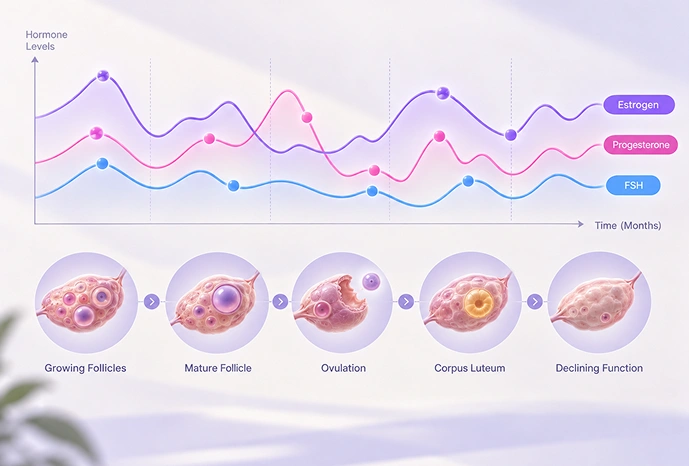
This is the part that trips people up. During perimenopause, estrogen and other reproductive hormones don’t decline in a smooth, predictable line. They can swing considerably from one cycle to the next, and sometimes from one week to the next, as ovarian function becomes erratic before it winds down. That means a hormone level drawn on one day might look completely different a few weeks later in the same woman.
Because of this, a single hormone reading is really a snapshot of that particular day, not a stable measurement of “where someone is” in the transition. This is one reason major medical bodies caution against relying on one blood test to determine perimenopausal status in women with typical symptoms and menstrual changes at a typical age.
What Can a Hormone Panel Show?
Hormone testing may provide additional information in some situations, but it’s rarely used as the sole basis for a diagnosis. A panel can offer a broader snapshot of reproductive, thyroid, and metabolic markers at one point in time, which a doctor can then weigh alongside a woman’s age, symptoms, menstrual history, medications, and overall health picture. It’s a piece of the puzzle, not the whole picture.
What Is Included in PrimeCare’s Female Hormone Panel?
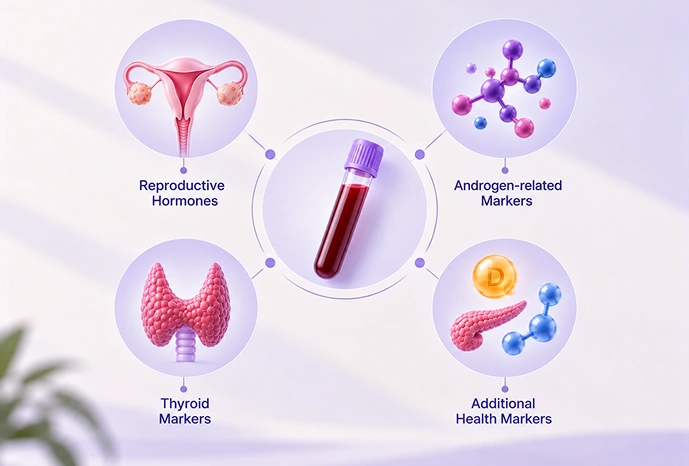
PrimeCare’s Comprehensive Female Hormone Panel groups several markers into broader categories rather than testing hormones in isolation:
Reproductive hormones: FSH, LH, estradiol, and progesterone, which relate to ovarian function and the menstrual cycle.
Androgen-related markers: total and free testosterone, DHEA-S, SHBG, and albumin, which relate to androgen activity and how much of certain hormones are available for the body to use.
Thyroid markers: TSH, Free T3, and Free T4. These matter here because thyroid conditions can produce fatigue, mood changes, and cycle irregularities that closely resemble perimenopause.
Additional health markers: insulin, total cortisol, and vitamin D, which relate to metabolic health, the body’s stress response, and bone and general health, respectively.
The panel is currently offered at ฿12,100. A PrimeCare doctor reviews each patient’s health history and helps confirm which testing is actually appropriate for her situation, rather than defaulting to the full panel for everyone.
Can a Hormone Test Confirm Perimenopause?
Not on its own, and not reliably. Because hormone levels fluctuate so much during this transition, a single FSH, estradiol, or progesterone result cannot independently confirm or rule out perimenopause. A “normal” result on a given day doesn’t mean a woman isn’t perimenopausal, and an elevated one doesn’t necessarily confirm it either. Doctors typically look at the overall clinical picture, age, symptom pattern, and changes in menstrual cycles, and use lab testing selectively, most often when the picture is unclear or when other conditions need to be ruled out.
When Might Hormone Testing Be Useful?
Testing tends to be more useful in specific situations: when symptoms start unusually early, when the diagnosis genuinely isn’t clear from history and symptoms alone, when a woman has had a hysterectomy and can’t track cycle changes, or when a doctor wants to check for another condition, such as a thyroid disorder, that could be causing or worsening similar symptoms. It’s less useful as a routine confirmation test for a woman in her late 40s with classic, gradually changing cycles and typical symptoms, in that case, the clinical picture usually speaks for itself.
What Happens After the Test?
Results don’t get handed over as a standalone verdict. A doctor reviews them against the patient’s age, menstrual history, symptoms, medications, and broader medical background before drawing any conclusions. If treatment options such as hormone therapy come up in that conversation, the decision depends on individual symptoms, risk factors, and personal preference, not on a single lab value.
A Conversation Worth Having
If your cycles have started shifting, or you’re dealing with symptoms that don’t quite add up, that’s worth bringing to a doctor rather than trying to interpret alone. Testing can provide additional information that may be useful when interpreted alongside your symptoms and medical history, but the conversation with a qualified doctor is what actually makes sense of it. If you’re in Bangkok and want to talk through what’s going on, PrimeCare’s team can help you figure out what, if any, testing makes sense for you.
Frequently Asked Questions
Q1. What is perimenopause?
Ans1. The transitional years before menopause, marked by irregular periods and fluctuating hormone levels, typically starting in a woman’s 40s.
Q2. What’s the difference between perimenopause and menopause?
Ans2. Perimenopause is the transition; menopause is the specific point marking twelve months without a period.
Q3. Do all women need hormone testing during menopause?
Ans3. No. Many women are assessed based on age, symptoms, and menstrual history alone, without needing lab work.
Q4. Can thyroid problems cause symptoms similar to menopause?
Ans4. Yes. Fatigue, mood changes, weight shifts, and irregular cycles can all stem from thyroid conditions, which is part of why thyroid markers are often checked alongside reproductive hormones.
Q5. What does a female hormone panel include?
Ans5. PrimeCare’s version includes reproductive hormones, androgen-related markers, thyroid markers, and additional markers like vitamin D, insulin, and cortisol, reviewed together by a doctor rather than in isolation.