
 English
 Hindi
Hindi Arabic
 Bengali
 Chinese
 French
 German
 Italian
 Japanese
 Korean
 Russian
 Spanish
 Thai
Thai Vietnamese

Because once diabetes develops, complications can be life-changing
Many people think diabetes is “just high sugar.” In reality, diabetes is a progressive metabolic
disease that can quietly damage blood vessels and nerves for years — often before
symptoms become obvious.
The good news: Type 2 diabetes is often preventable or at least delayable with the right
lifestyle and early detection.
What Is Diabetes?
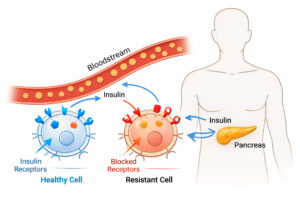
Diabetes happens when the body cannot regulate blood sugar properly — either because it
doesn’t produce enough insulin or can’t use insulin effectively. Over time, uncontrolled high
blood sugar damages the heart, kidneys, eyes, and nerves.
Symptoms You Should Not Ignore
Symptoms can be subtle, especially in type 2 diabetes. The World Health Organization
(WHO) lists common symptoms as:
● Feeling very thirsty
● Urinating more often than usual
● Blurred vision
● Feeling tired
● Unintentional weight loss
Important note: Prediabetes and type 2 diabetes often have no symptoms at all, which is
why screening matters.
Why Diabetes Is Dangerous (It’s Not Just About Sugar)
Once diabetes is established — especially if undetected or poorly controlled — it significantly
increases the risk of serious complications. According to WHO, diabetes can lead to:
● Heart attacks and stroke (cardiovascular disease)
● Kidney failure (including progression to end-stage kidney disease)
● Permanent vision loss/blindness
● Foot ulcers and lower-limb amputations
This is why preventing diabetes (or catching it early) is one of the most powerful long-term
health moves you can make.
Prevention Starts With Detection: What to Include in Your
Checkups
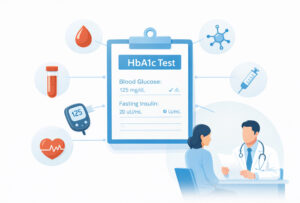
Because diabetes can develop silently, routine screening is essential — especially before
symptoms appear.
A practical starting point is to include HbA1c in regular health checkups, particularly if you
have risk factors such as excess weight, family history of diabetes, high blood pressure,
abnormal cholesterol, a history of gestational diabetes or PCOS, or a sedentary lifestyle.
HbA1c reflects average blood glucose levels over the past 2–3 months and is a widely
accepted tool for identifying prediabetes and diabetes early. However, it is important to
understand its limitation: HbA1c often becomes abnormal only after insulin resistance has
already been present for years.
Insulin resistance is the key early metabolic driver of type 2 diabetes, weight gain, and
metabolic disease. Identifying it early allows intervention at a stage when the condition is still
reversible.
One way to assess early insulin resistance is the HOMA-IR score, which is calculated using
fasting glucose and fasting insulin levels. While HOMA-IR is not a diagnostic test for
diabetes, it can serve as a supportive screening tool to detect metabolic imbalance before
blood sugar levels cross diagnostic thresholds.
When interpreted appropriately and in clinical context, HOMA-IR helps identify individuals at
higher risk and allows for earlier lifestyle intervention — when prevention is still possible.
Lifestyle Is the Key Factor (Especially Diet)
WHO emphasizes that lifestyle changes are the best way to prevent or delay type 2 diabetes
— including a healthy diet, regular physical activity, maintaining a healthy weight, and
avoiding tobacco.
In real life, the biggest long-term driver is often the diet pattern you repeat daily:
● Frequent sugary drinks/sweets
● Highly refined carbs (especially when paired with low fiber)
● Excess calories over time
● Low protein + low vegetable intake
● Irregular eating habits + poor sleep + chronic stress (which worsens insulin
resistance)
Small daily changes, consistently applied, are what protect your metabolism for the long run.
Your Health, Your Future
Diabetes is not only treatable — it is often preventable (for type 2). And even when
prevention isn’t possible, early detection can dramatically reduce complications.